Tesla’s 2026 roadside assistance policy still sends transport for an empty pack. It doesn’t send a charger to the car. Inland Empire owners keep learning that on the shoulder. The 2026 wording draws a harder line around warranty faults. A depleted pack is still treated as your problem. Tesla’s usual fix is a contracted tow, not a 240-volt hookup.
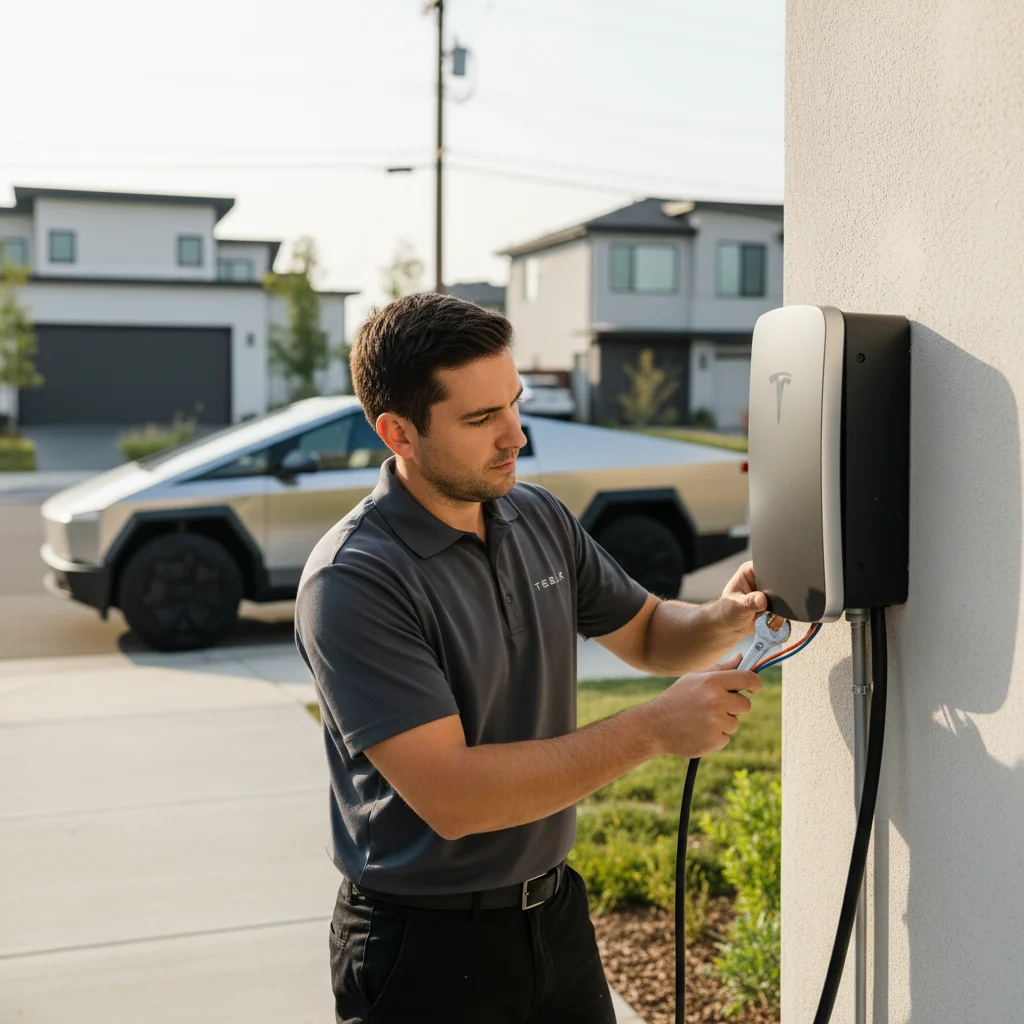
The 2026 change that didn’t arrive
Owners asked Tesla for a charger on site. Tesla’s published path still sends a truck that moves the car. Confirm the live terms on Tesla’s support pages. This research didn’t turn up a public 2026 fee table. Tesla sets those charges and can change them. Open the app for your VIN and read the current offer.
Here’s the split that actually matters. Covered powertrain and software faults can still draw warranty roadside. Running the pack to zero doesn’t qualify. That second case is the inland pattern. It shows up after a Cajon climb or a mountain day. Tesla’s answer in that case is transport. The operator we’d send is a different product.
Start with what Tesla roadside actually covers. Then read empty pack versus a warrantable breakdown. Both pages stay on Tesla’s own categories. Neither page invents a price Tesla didn’t publish.
Tesla Ranger visits, when Tesla assigns one, target in-warranty hardware or software. They’re not a public charging stop for you. An out-of-charge tap is a different queue. The vehicle that arrives is often a third-party tow. That driver may have no Level 2 source. You asked for miles and Tesla sent a hook.
Older owners still quote a flat free-tow distance from memory. We couldn’t confirm a mileage allowance in Tesla’s current public wording. Don’t budget around a number Tesla no longer prints. Coverage now tracks warranty status and vehicle age. Check your car, not a screenshot from 2023.
Warranty roadside versus an empty pack
Tesla roadside remains a manufacturer program for owners. It’s not a local charge visit on the shoulder.
While the New Vehicle Limited Warranty is active, Tesla may cover a tow. That tow is to a Tesla Service Center for a covered fault. The fault has to be powertrain or software Tesla lists. Ranger diagnostics can apply where Tesla says they do. Winching can apply when a covered mechanical failure left the car stuck. None of that’s automatic for every stall. Confirm each line on Tesla’s site for your model year.
The other column is a pack at zero. Tesla has long treated out-of-charge tows as owner-pay. The 2026 language makes that harder to miss. Tire help beyond Tesla’s loaner-wheel process can sit outside warranty roadside too. After the New Vehicle Limited Warranty, towing often follows Tesla’s Extended Service Agreement. Sometimes it doesn’t, and Tesla decides. Your insurer may reimburse part of a bill. Ask them before you assume it will.
The 12-volt battery is a third column. Every Tesla still uses a 12V to wake the car. A dead 12V looks like a brick from outside. Coverage depends on whether Tesla ties that failure to a covered part. Age-related 12V wear after warranty is usually yours. Run the checks in how to tell a Tesla 12V is dead, then jump it.
Why this policy hits the Inland Empire the way it does
The Inland Empire is two counties, not one commute. ACS 2019-2023 counts 2,478,600 people in Riverside County. San Bernardino County holds 2,197,104 people on the same vintage. A Model Y dead on I-10 in Colton is one stall. A Model 3 fading toward Victorville is another. Tesla’s policy doesn’t care which city you’re in. The road still does, and the grade does too.
Valley freeways are the daily version of this. I-10 runs through Colton, Redlands, Beaumont, Banning, and Calimesa. I-215 crosses Moreno Valley and into Perris Valley. SR-60 cuts across Jurupa Valley at grade. SR-91 stacks Corona traffic on a packed shoulder. You’re on a shoulder with an empty pack. Tesla’s product is a hook and a destination. Charge Pro IE doesn’t publish arrival times. Tesla’s on-screen estimate isn’t a contract either.
Grades rewrite a low-pack plan in a hurry. The I-15 Cajon climb toward Hesperia and Victorville burns range fast. Out of charge on I-15 at the Cajon climb is the local walkthrough. A transport over that pass is a long move. A Level 2 visit is built to add about 10 to 20 miles. That add happens in 15 to 30 minutes of charging. It’s charging time, never an arrival time.
Mountain days have a second failure mode here. Lake Arrowhead, Crestline, and Running Springs sit above the valley. Big Bear Lake and Big Bear City sit up there too. The downhill can look free in the trip planner. Owners still strand after the visit ends. Tesla’s policy doesn’t grade your route. An empty pack’s still an empty pack. Transport off those roads is a different job. A short charge where the car sits is the other job.
High Desert miles around Adelanto and Apple Valley run long. Fontana warehouse rows and Ontario airport lots are the work-shift stall. The car sits at the end of a shift. The pack is at zero, or the 12V won’t wake. Tesla’s app still offers roadside from that lot. The typical product from Tesla is still a tow.
South county has its own stalling pattern too. Temecula, Murrieta, and French Valley mix new tracts with canyon roads. The Ortega near Wildomar is a common stranding story on this site. Tesla still classifies a zero pack as transport. ACS 2019-2023 puts only 2.2% of Eastvale units as built before 1980. A dark home charger there still isn’t Tesla’s charger truck.
Home utilities won’t meet you on the shoulder either. Southern California Edison serves Fontana, Ontario, Chino, and Chino Hills. It also serves Temecula, Corona, and most other valley cities in the research. Riverside Public Utilities serves the City of Riverside. Colton Electric Utility owns the wires inside Colton. Banning runs its own municipal electric utility. Bear Valley Electric Service covers Big Bear Lake and Big Bear City. Moreno Valley splits SCE and Moreno Valley Utility. Rancho Cucamonga has an RCMU pocket beside SCE. Victorville residential service runs on Southern California Edison. Victorville Municipal Utility Services states it doesn’t serve residential areas now. It only serves the Southern California Logistics Airport and Foxborough Industrial Park. SCE’s TOU-D-PRIME and Riverside’s EV rate shape home charging. They don’t rewrite Tesla’s 2026 roadside policy.
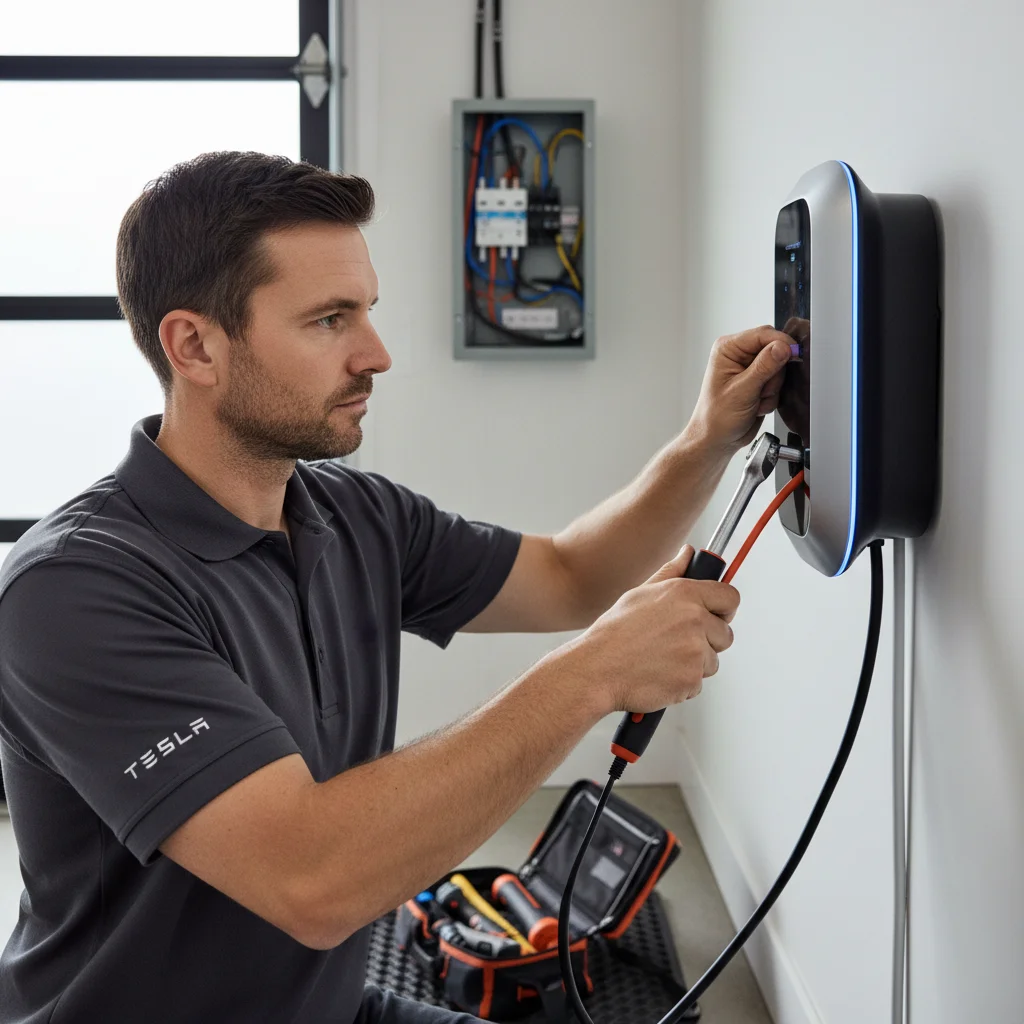
How Tesla wants you to ask, and when the app goes dark
Tesla now routes most requests through the in-app Roadside Assistance flow. You tap the request and answer a short triage. The system assigns a Ranger, a contracted tow, or another option Tesla chooses. A live phone agent isn’t the default door anymore. You should confirm those labels in your Tesla app. Tesla’s support pages are where to look if the menu moved.
The app needs a working cellular signal first. It also needs enough 12V to keep the car awake. A dead 12V can block both of those. The car ignores commands and sits like a brick. You can’t request help through a brick. Plan a phone path before that loop starts.
Skip treating any on-screen arrival figure as a promise. Charge Pro IE publishes none of those times. Tesla’s on-screen number is only Tesla’s display. This page won’t guess wait times for Riverside, San Bernardino, or the High Desert.
If Tesla bills you and you want to dispute it, save proof. Screenshot the dispatch confirmation and the resolution screen. If a third-party tow shows, get the company name and truck number. Photograph dash warnings and the car’s position on the road. Note the time you tapped the request. Open Tesla Support chat in the app for a case. Keep that case number with your screenshots.
AAA, Tesla Insurance, and credit-card roadside are extra layers. They’ve got their own scripts and exclusions. Compare the stack in Tesla, AAA, or local mobile rescue. None of those programs is guaranteed to send a charger. Read each policy before you mix them on the shoulder.
When a local charge-in-place visit is the product you actually wanted
Four inland situations keep pointing away from Tesla transport.
You’re out of charge on a freeway shoulder. Tesla’s product in that moment is a tow. Independent operators we connect you with bring a 240-volt Level 2 source. Teslas take a native NACS plug from that source. Other EVs use a CCS or J1772 adapter. The typical add is 10 to 20 miles of range. That add takes 15 to 30 minutes of charging. The operator quotes you before starting any charge. The operator then bills you directly for the visit. Charge Pro IE sets no price on that visit.
Your 12V is dead and the car won’t wake. A jump or on-site 12V swap is a hands-on job. A tow can still leave you with a car that won’t wake. The pros we send handle Tesla on that 12V path. They also handle every major EV brand the same way.
You’re on a grade, a mountain road, or a High Desert stretch. A long transport may be Tesla’s file for that pin. A mobile charge is a different outcome for the same pin. What a mobile EV charging visit actually is spells out the limits. It also spells out what it isn’t.
You already requested Tesla roadside and then wanted miles, not a destination. Tesla’s queue stays Tesla’s to manage, not ours. You can still ask a local operator for a quote. Canceling Tesla’s dispatch is a Tesla conversation only. This page won’t manage that Tesla ticket.
Charge Pro IE’s a referral line, not a shop. We match stranded EV drivers with independent local mobile rescue operators. We hold no licence for this roadside work. We own no trucks and employ no technicians. We publish no business hours and promise no arrival time. We serve cities across the Inland Empire, both counties.
If Tesla offered a hook and you wanted a charge
If the 2026 policy left you with transport, that’s the match. You wanted electrons in the pack, not a hook. Use Tesla roadside rescue when the pack is empty or the 12V is dark. An operator quotes first, then bills you. Call (909) 250-2881 when you want that connection.
Frequently asked questions
What changed in Tesla’s 2026 roadside assistance policy?
The live wording still sends transport for an empty pack. It doesn’t send a charger to the car. Tesla also pushes dispatch through the app now. Coverage tracks warranty status and vehicle age more tightly. Confirm the current text on Tesla’s support pages. We couldn’t verify a published 2026 fee table in this research.
Does Tesla send a charger when the pack is empty?
No, Tesla’s roadside path for a depleted pack is still a tow. A mobile Level 2 visit is a separate local service. Independent operators quote that work before they start.
What if the 12V is dead and the Tesla app won’t request help?
A dead 12V can keep the car from talking to the app. You can’t start the usual roadside flow. A technician who can access the car and jump the 12V breaks that loop. Tesla’s 12V coverage still depends on warranty and cause. Check Tesla’s terms for your VIN before you assume coverage.