Tesla roadside assistance covers warrantable failures. That’s while the car is still in Tesla’s published new-vehicle warranty. It’ll send help for a flat, a lockout, a dead 12-volt, a winch, or a tow to service. An empty traction pack isn’t that kind of failure. Tesla’s published answer is a flatbed to a Supercharger or a service center. It’s not a 240-volt charge on the shoulder. Inland Empire drivers still need a local Level 2 option for that empty-pack case.
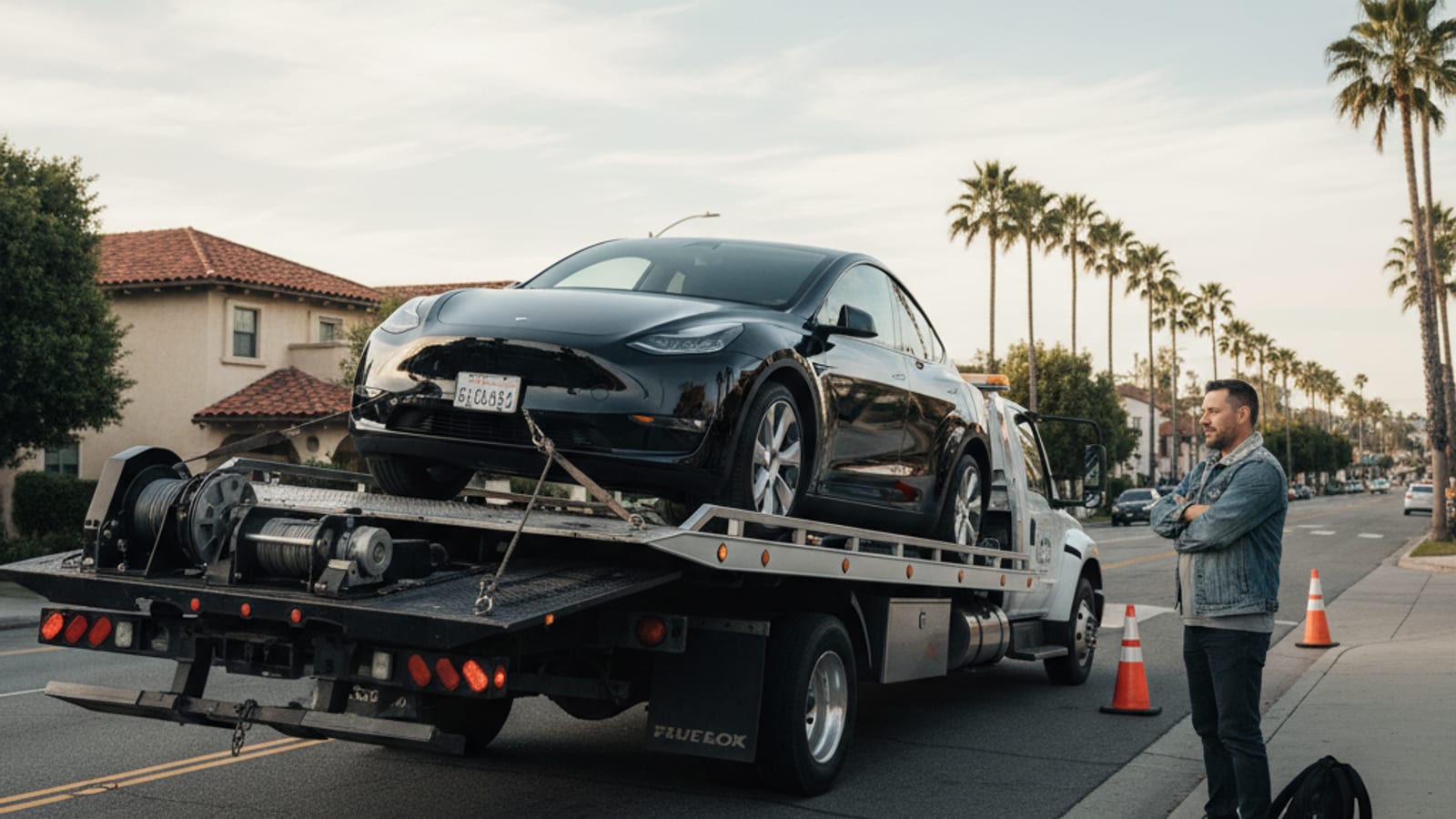
Coverage follows the warranty, not your remaining miles
Tesla includes roadside help with the new-vehicle warranty it publishes for that car. For many new Teslas that’s been four years or 50,000 miles, whichever comes first. Confirm what’s still active in the Tesla app before you count on a complimentary truck. When that window ends, the free roadside benefit ends with it.
Riverside County’s ACS 2019-2023 population is 2,478,600. San Bernardino County’s is 2,197,104. Four years is a short window on inland commute cars.
You request help in the Tesla app, or by calling Tesla. Tesla often assigns a contractor. The person at your bumper may know Tesla jump points. They may also arrive as a standard tow truck.
What Tesla actually sends a truck for
Flats, lockouts, and winching
Tesla roadside can send tire help, a spare swap or a mobile repair, depending on the case. It can often unlock the car remotely through the app. A truck may never roll. It can winch you out of sand, mud, or a soft shoulder. The operators this line connects you with handle charge and 12-volt work, not tires, lockouts, or winching. If that’s the job and you’re in warranty, Tesla is the right first call.
A dead 12-volt, or a tow to service
Teslas still have a 12-volt battery, and it runs computers, contactors, and door logic. When it dies, the car can look fully dead even with range in the pack. Tesla roadside can send a 12-volt jump. That’s a low-voltage assist, not a pack charge.
Towing is also on Tesla’s list. The complimentary tow is to the nearest qualifying destination Tesla’s policy allows. That may be a service center, a Supercharger, or another spot inside the included limit. If you want a longer hook than that included distance, Tesla’s terms put the extra miles on you. This site couldn’t confirm a current published per-mile add-on. Ask Tesla for the included miles before the truck hooks up.
The empty pack is the gap
Tesla roadside doesn’t send a charging truck to the shoulder. If the high-voltage pack is empty, and the car isn’t in a warrantable breakdown, Tesla’s path is a tow. You ride to a Supercharger. You don’t leave with range added where you stopped. Empty pack vs a warrantable breakdown spells out that split.
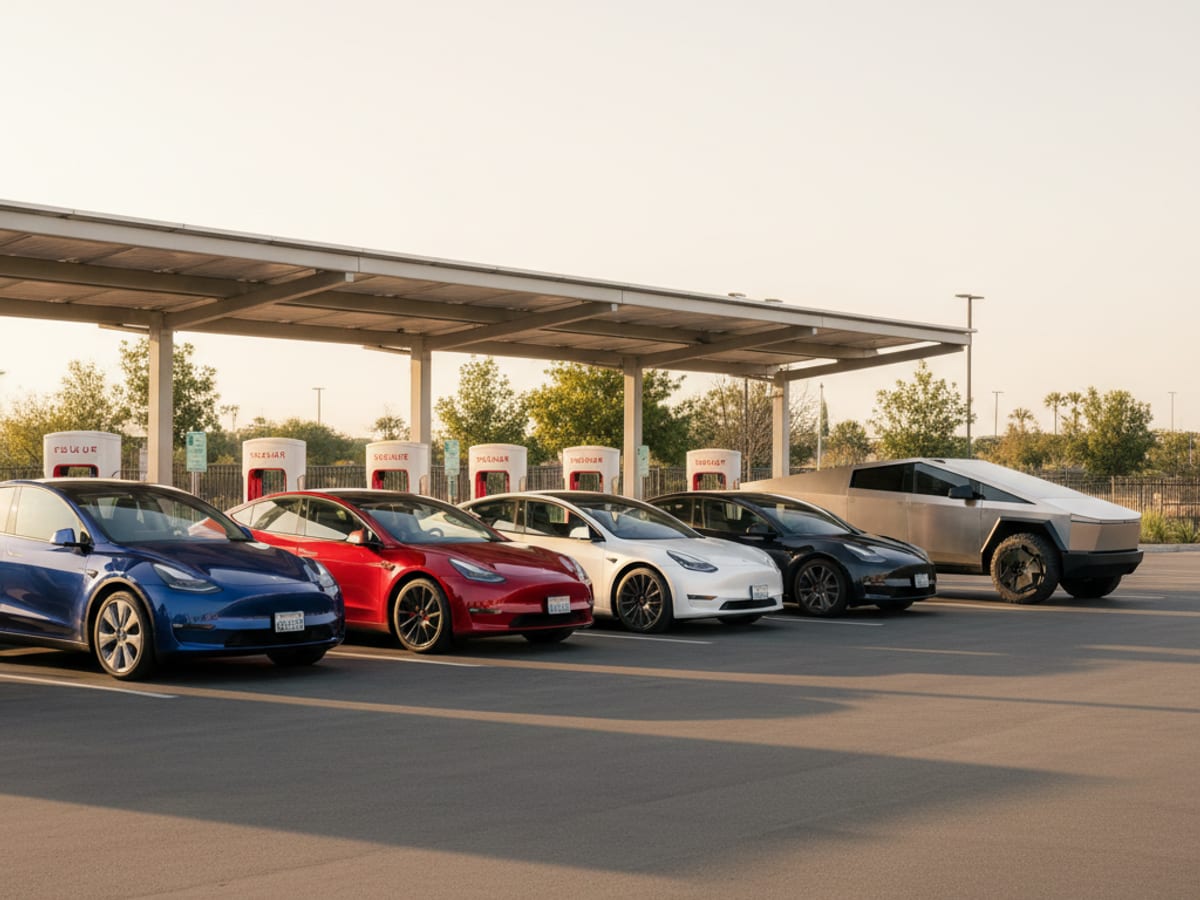
A tow-to-Supercharger plan still depends on an open stall. Packed or offline stalls mean you took the ride and you’re still waiting. See when the Calimesa Tesla stalls are packed or offline.
Why drivers here still need a local 240-volt option
The Inland Empire isn’t one driving day. Heat, grades, and warehouse shifts empty packs in different ways. A climb on I-15 toward Victorville through Cajon is a grade drain. I-215 through Moreno Valley and Perris is a long valley run. SR-60 through Jurupa Valley and I-10 through Colton and Redlands mix freight with commute miles. Mountain days above Crestline, Lake Arrowhead, and Big Bear Lake add elevation, then a long descent. In those spots you often want enough range to roll, not a ride on a truck.
Home power isn’t one utility here either. Most cities sit on Southern California Edison. Riverside has been on Riverside Public Utilities since 1895. Colton owns the electrical infrastructure inside city limits. Banning runs a city electric utility. Big Bear Lake and Big Bear City sit on Bear Valley Electric Service. Moreno Valley is split between SCE and Moreno Valley Utility. Rancho Cucamonga is split between SCE and Rancho Cucamonga Municipal Utility in a southeast pocket. Tesla roadside policy doesn’t change with your meter. Your plan to get home and plug in does.
Housing age splits the same way. ACS 2019-2023 figures put pre-1980 housing at 43.8% in San Bernardino County. Riverside County’s share is 30.2%. San Bernardino city’s share is 60.9%. Eastvale’s is 2.2%. Tesla still won’t charge you at the curb in either city.
Warehouse rows and airport lots around Ontario add a third pattern. The car dies in a stall at shift change, not on a freeway shoulder. A 240-volt hookup at the bumper is the job Tesla doesn’t send.
What a local 240-volt visit is, and isn’t
Charge Pro IE is a referral line. It matches stranded EV drivers with independent local mobile rescue operators. It doesn’t hold a contractor license, own trucks, or employ technicians. It doesn’t set prices or promise an arrival window. The operator quotes you before starting and bills you directly.
Those operators bring a 240-volt Level 2 source to the car. Teslas use a native NACS plug. CCS or J1772 adapters cover other major EV brands. A typical session adds about 10 to 20 miles of range in 15 to 30 minutes of charging. That’s charging time, never an arrival time. The same stop can jump or replace a dead 12-volt.
If both the 12-volt and the pack are down, Tesla’s published path is still a tow. A local operator can wake the 12-volt and add Level 2 miles in one visit, then you drive. How a mobile EV charging visit works is the walkthrough. See Tesla roadside rescue and mobile EV charging.
When Tesla roadside is the right first call
Use Tesla first when you’re in the published warranty window and you need:
- Tire help for a flat
- An unlock, especially if the app can do it remotely
- A tow to a service center for warranty work
- A winch off a soft shoulder, sand, or mud
- A 12-volt jump you want handled as Tesla roadside
Complimentary coverage on the right failure is the right tool.
When a local charge is the better tool
Ask for a mobile Level 2 visit when:
- The pack is empty, the car isn’t in a repair-needed breakdown, and you want to drive it
- You’re in a lot, a driveway, or on a shoulder where a flatbed is a poor fit
- You’re out of warranty, so Tesla’s complimentary tow is gone
- You’d rather add 10 to 20 miles on site than ride to a Supercharger
You can request Tesla roadside and call for a local operator in the same stretch. Once you know which job you actually have, cancel the one that doesn’t fit. Don’t assume either path waives a fee. Ask when you call.
AAA is a separate stack. Keep it for tires, lockouts, and tows if you already pay for it. AAA still isn’t a 240-volt charge on the bumper. AAA or a local Tesla rescue compares who actually rolls.
The operators in this network don’t do collision recovery, high-voltage pack diagnostics, or tire work. If that’s the job, Tesla, your insurer, or a tow is the right channel. A Level 2 visit also isn’t a substitute for a long DC session. It’s a roadside top-up so the car can roll under its own power.
If the pack is empty and you want a 240-volt hookup, call (909) 250-2881. Charge Pro IE connects you with an independent local operator. That operator quotes before starting. Tesla remains the right number for a warrantable failure, a tire, a lockout, or a winch.