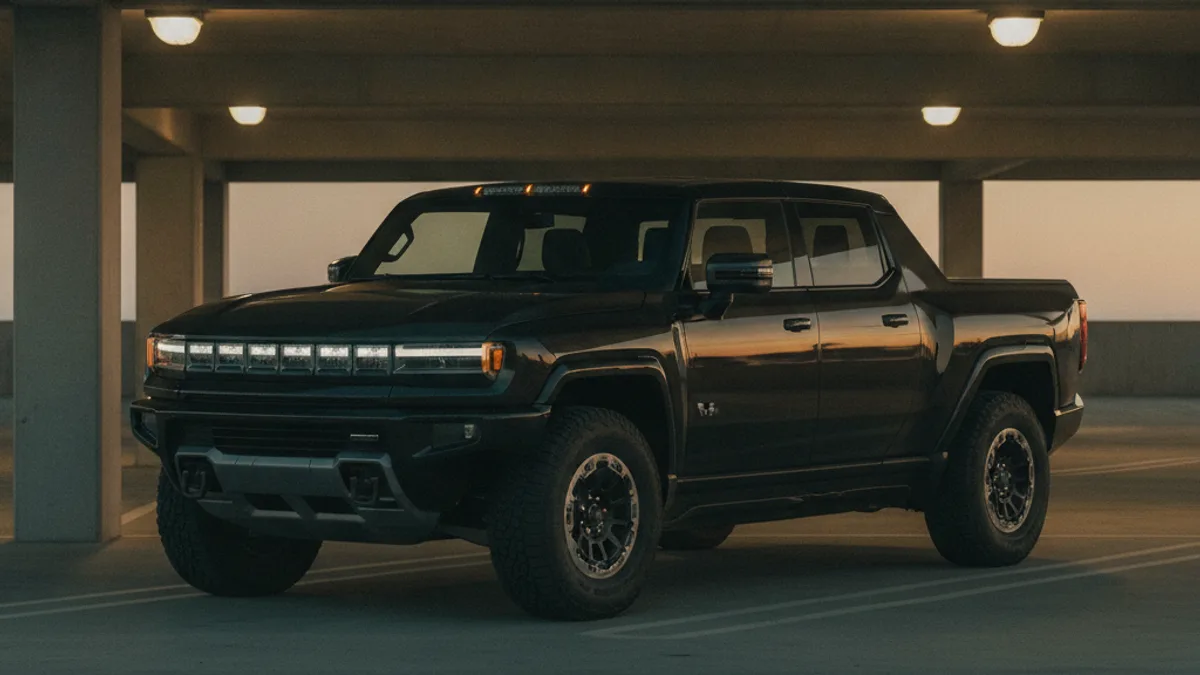
A GMC Hummer EV that sits dark after Inland Empire heat is usually a flat 12V. The Ultium pack can still hold plenty of range. The truck still won’t wake. You’ll get no dash, no door handles, and no Watts to Freedom screen. Long parking here drains the small battery that boots the computers. The traction pack isn’t the usual problem.
Where this hits around the Inland Empire
Summer parking here cooks a Hummer EV that sat too long. A Fontana warehouse shift leaves the truck on hot pavement. Ontario airport lots and warehouse rows do the same over a long stay. You come back expecting a lock chirp and get silence.
A Riverside or Moreno Valley driveway isn’t automatic shade. After a work day in Corona, a lot off the 91 is still hot. Eastvale and Chino work parks look new, and they still hold heat after sundown. The 12V keeps feeding alarms, cameras, and cabin preconditioning the whole time.
The High Desert is harder on a parked truck. Victorville, Hesperia, and Adelanto leave it in open sun for hours. A stop in Phelan or Apple Valley can run longer than you planned. Walk back to the Hummer EV and the cabin is dead. The range number, if you can even see it, isn’t the thing that failed.
Mountain parking is a different drain, not a cooler miracle. Big Bear Lake and Lake Arrowhead drop at night. The truck can still sit for hours at a lot after a day on the hill. Lights, lock modules, and accessories sip 12V the whole outing. You return to a dark truck, not an empty Ultium pack.
A destination lot in Cabazon can do the same after a long visit. So can a Glen Helen show that ran late. None of those scenes require a failed drive battery. They require a 12V that sat too long in heat.
Grades and heat already work the main pack on inland roads. How you treat the pack in this climate is a separate job. The no-start in front of you is usually the small battery.
What a Hummer EV no-start actually is
The 12V battery wakes the truck’s computers. Those computers close the contactors into the Ultium pack. If the 12V can’t hold voltage, that handshake never finishes. Nothing turns on, even with a healthy main pack. The number on the range gauge isn’t the system that starts the truck.
Two owner patterns look identical from the driver’s seat. The Hummer EV sat for days, and the 12V bled down in the heat. Or the 12V is worn out and can’t hold a charge under load. Either way you get a silent cabin. A jump can bring the screens back once. A dying 12V will strand you again within a few days.
That’s the same low-voltage failure other EVs hit. A dead 12V can take the whole vehicle down even when the traction pack is fine. The Hummer EV adds one extra risk if you shut a door out of habit.
Don’t assume you ran the pack to empty because the truck looks bricked. An empty pack and a dead 12V can both leave you stuck. They aren’t the same repair. If the last thing you saw was a healthy range figure, start with the 12V.
The conditions unable to shift warning
Hummer EV owners often get a “conditions unable to shift” message. Other electrical warnings can stack on top of it. Screens may fail to load, or the truck may refuse to wake. That cluster points at a sagging 12V, not a failed Ultium drive unit.
Don’t keep cycling power hoping the infotainment catches up. Restarting the screens doesn’t restore voltage under load. Bring the 12V back with a jump or a dedicated charge. The shift warning usually clears once that system is in a healthy range.
If the truck half-wakes and then dies when you try to go into gear, stop. That’s a battery that can’t hold voltage when the computers load it. Another restart won’t fix that.
The door you shouldn’t slam
GMC put the Hummer EV’s 12V in the front trunk. GMC calls that space the eTrunk. The battery sits on the passenger side under a plastic cover. Three tabs hold the cover down. That part is simple once the lid is open.
The expensive quirk is the doors. The Hummer EV uses window indexing. The glass drops a little when you open a door. It rises again as the door shuts so the window doesn’t hit the roof seal at an angle. That motion needs 12V. With a dead battery, it never happens.
Close a door the usual way and the top of the glass can strike the sky panel or A-pillar trim. It can chip or crack. Treat every door as manual until the 12V is jumped. Ease it shut with your hands. Don’t let the swing finish the close.
This is the moment people regret in a parking structure. You reach back to shut the door on instinct. The truck is dark, so indexing is off. Slow down before that door latches.
Opening the eTrunk with no power
The eTrunk release is electric. A dead 12V means the button and the fob won’t pop it. GMC built a mechanical workaround for that lockout. Sit in the driver’s seat and look left of the brake pedal. Up behind the wiring harness there’s a silver wire with a loop. Pull that loop until you feel it give. You should hear the eTrunk release.
It takes a little feel on the first try. The loop hides behind other wiring. No electrical power is involved. Once the lid is up, lift the plastic cover by its three tabs. The 12V battery and its terminals are under that cover.
If you can’t find the loop, don’t pry the eTrunk with a tool. You can damage the latch. Wait for an operator who can use the manual release, or keep feeling left of the pedal until the loop moves.
Jump terminals and a safe wake-up
You’ll see two terminals with the cover off. The positive terminal sits under a red sliding door. Flip that door open and clamp on. The negative terminal is to the left, next to a green connector. Clamp negative there the same way you would on any 12V jump.
Connect positive to positive first. Then connect negative to the ground terminal. Wait a minute before you try to power the truck. If a compact jump pack won’t wake a deeply discharged Hummer EV, an AGM-rated charger on those terminals often will. It may need a longer sit than a quick jump.
For clamp order and the safety notes, use our guide to jumping an EV at the curb. Don’t reverse the clamps. Don’t keep hammering the start sequence on a truck that still won’t boot.
Once it wakes, don’t slam the doors to celebrate. Indexing should work again with voltage back. Confirm the windows drop and rise before you treat the doors as normal.
Symptom to likely cause
| Symptom | Likely cause |
|---|---|
| Dashboard dark, doors unresponsive | 12V fully discharged |
| ”Conditions unable to shift” message | 12V voltage too low to run the electronics |
| eTrunk won’t open with fob or button | 12V too low to power the electric release |
| Window strikes trim when a door closes | Indexing is off because the 12V is dead |
| Repeated no-starts a few days after a jump | 12V has failed and needs replacement |
If you’ve already jumped it once and it died again, stop repeating the same jump. A 12V that dies again after a jump is telling you it can’t hold a charge. Replacement is the next step, not another pack on the terminals.
A jump is a wake-up, not a repair. Plan the replacement before the next heat wave parks you in Fontana or on a High Desert errand.
After it starts, what still isn’t fixed
Getting the screens back doesn’t prove the 12V is healthy. It proves you restored enough voltage to boot. Drive it home if you can, and get the 12V tested. If it won’t hold, replace it. Sitting another weekend in Moreno Valley heat will flatten a weak one again.
Watch for a repeat of the shift warning, a slow-to-wake dash, or door handles that hesitate. Those are early tells. Waiting until the cabin is fully dark again is how people end up locked out of the eTrunk on a Sunday.
If the Ultium pack is actually low, that’s a different call. A 12V jump won’t add range. A mobile Level 2 hookup is the pack-side job. Don’t mix those two problems when you describe what you need.
Who actually helps a Hummer EV here
Charge Pro IE is a referral line, not a yard with trucks. We match stranded drivers with independent local operators. They quote you before they start. They bill you directly. We don’t set a price, and we don’t publish an arrival window.
The pros we connect you with are licensed and insured. They jump or replace a dead 12V on site. They handle Tesla and every major EV brand, the Hummer EV included. If the button won’t open the eTrunk, they can use that manual loop. If the pack is empty too, that’s a separate mobile charge, quoted on its own.
A no-start isn’t automatically a tow. Towing a large EV is a different job, and it’s the wrong first move when the 12V is the failure. For GM’s other electric truck on the same family of low-voltage issues, see our GMC Sierra EV emergency charging notes. For a Hummer EV that won’t wake, start with non-Tesla EV rescue.
If the truck is dark and the eTrunk won’t open, don’t force a door shut. Call (909) 250-2881 and we’ll connect you with a local operator. Confirm the quote with that operator before any work begins.
Frequently asked questions
Why won’t my GMC Hummer EV start if the gauge still shows range?
The range figure comes from the Ultium pack. The 12V system is what actually boots the truck. If that small battery is dead, the startup sequence never finishes. A jump on the 12V is what usually brings the screens back.
How do I open the eTrunk when the 12V is dead?
Look in the driver’s footwell, left of the brake pedal. Up behind the wiring you’ll find a silver loop. Pull it until it gives, and the eTrunk releases with no electrical power. The 12V sits on the passenger side under a three-tab cover.
Why shouldn’t I close the doors the usual way?
Window indexing needs 12V. With a dead battery the glass doesn’t drop and rise. A normal slam can chip the window on the sky panel or A-pillar trim. Close each door slowly by hand until the 12V is restored.