When a Dodge Charger Daytona EV won’t start, check the 12V path first. The traction pack can still look healthy in the app. The dash stays dark and the fob does nothing. That split means the low-voltage system never woke the car. A Daytona that sat after a pass run fits this inland pattern. The climb used the motors, and the sit flattened the 12V.
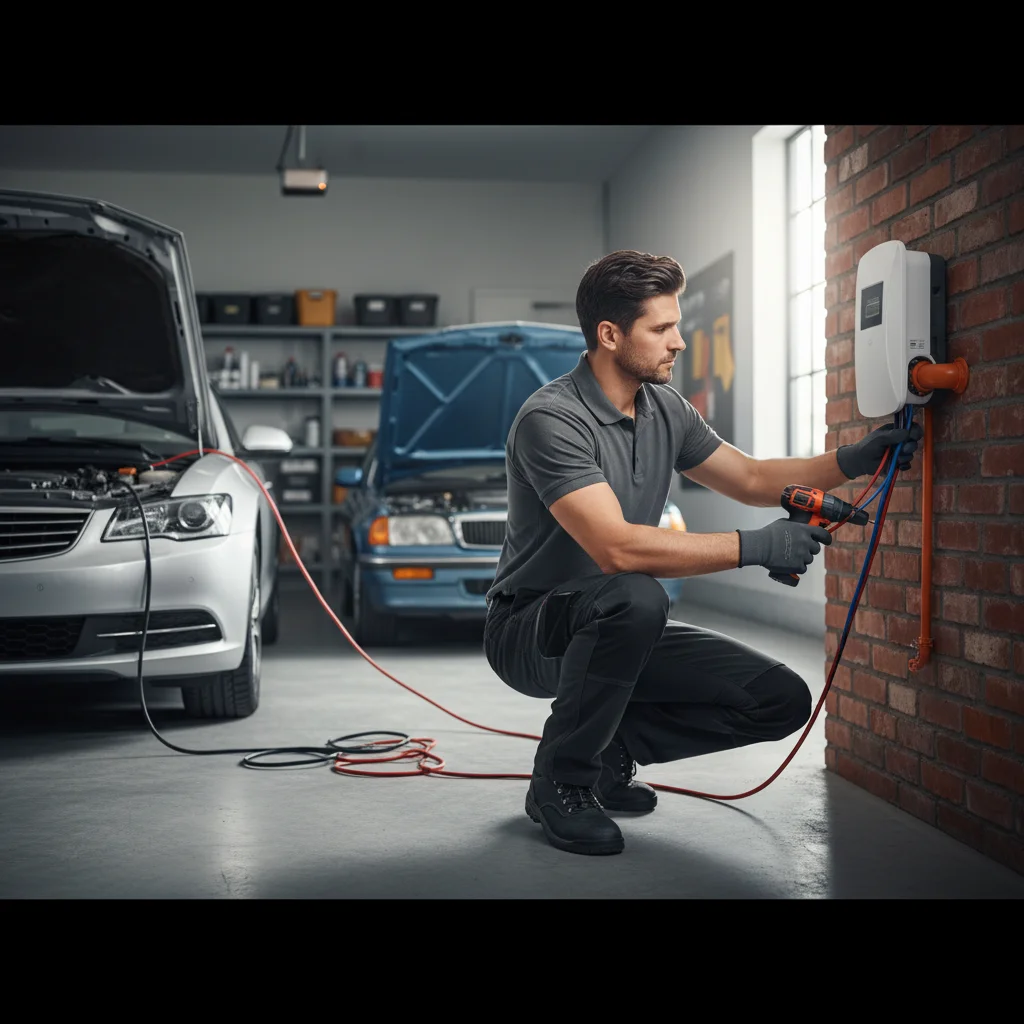
After a pass run, the sit is the failure
The car may have been fine on I-15 through Cajon Pass. It may have been fine on I-10 through Beaumont and Banning. Then you parked, and the small battery had to hold a rest charge. Climate control, screens, and lights had already drawn on that 12V. A weak 12V often fails at rest, not at speed. Hours later the fob does nothing and the cabin stays mute. That’s a battery that can no longer hold wake-up voltage.
The same sit shows up after a mountain day in Lake Arrowhead or Big Bear Lake, and after a shift near Ontario airport lots. Match the failure to the last thing the car did. A fade while driving with a low-range warning is pack energy. A refusal to wake after sitting is the 12V.
Inland heat in Fontana, Riverside, or Victorville makes a parked sit harder on a tired 12V. No verified temperature cutoff turned up for this car. Treat heat as extra stress, not as a published limit.
Two batteries, two different no-starts
The traction pack moves the wheels but not the low-voltage electronics. It doesn’t run the locks, the cluster, or the contactors. A separate 12V battery does that work. Pressing start is a 12V request to wake the pack. If that request never completes, the big pack never comes online. Performance trim doesn’t change that order. This car still boots like every other EV: small battery first, pack second.
That’s why a full-looking app is a clue, not comfort. Your phone can report pack state while the car itself is asleep. Feeding the charge port in that state wastes time. The charge door and the contactors need 12V too. For the same failure on any EV, see what happens when an EV 12V dies.
If the car faded on the road with a range warning, skip the jump. A 12V jump doesn’t put miles in the pack. That’s empty-pack recovery, not a 12V job. On the Cajon climb, see out of charge on I-15. The same fork holds on I-215 through Moreno Valley. It holds on I-10 in Colton or Redlands. It holds on SR-60 in Jurupa Valley.
Symptom to next move
| What you see | Likely cause | What to do |
|---|---|---|
| Dark cabin, no chime, fob dead | 12V is flat | Jump at the remote posts, then confirm details in the manual |
| App shows range, car won’t wake | 12V, not the pack | Leave the charge port alone. Jump the 12V. |
| Starts, then dies again in a day or two | 12V near end of life | Use the jump to get moving, then plan a replacement |
| Trunk won’t unlatch, cabin is dead | Electric latch has no power | Restore 12V first, then try the trunk |
| Lost motion with a low-pack warning | Traction pack is low | Ask for a mobile charge, not a jump |
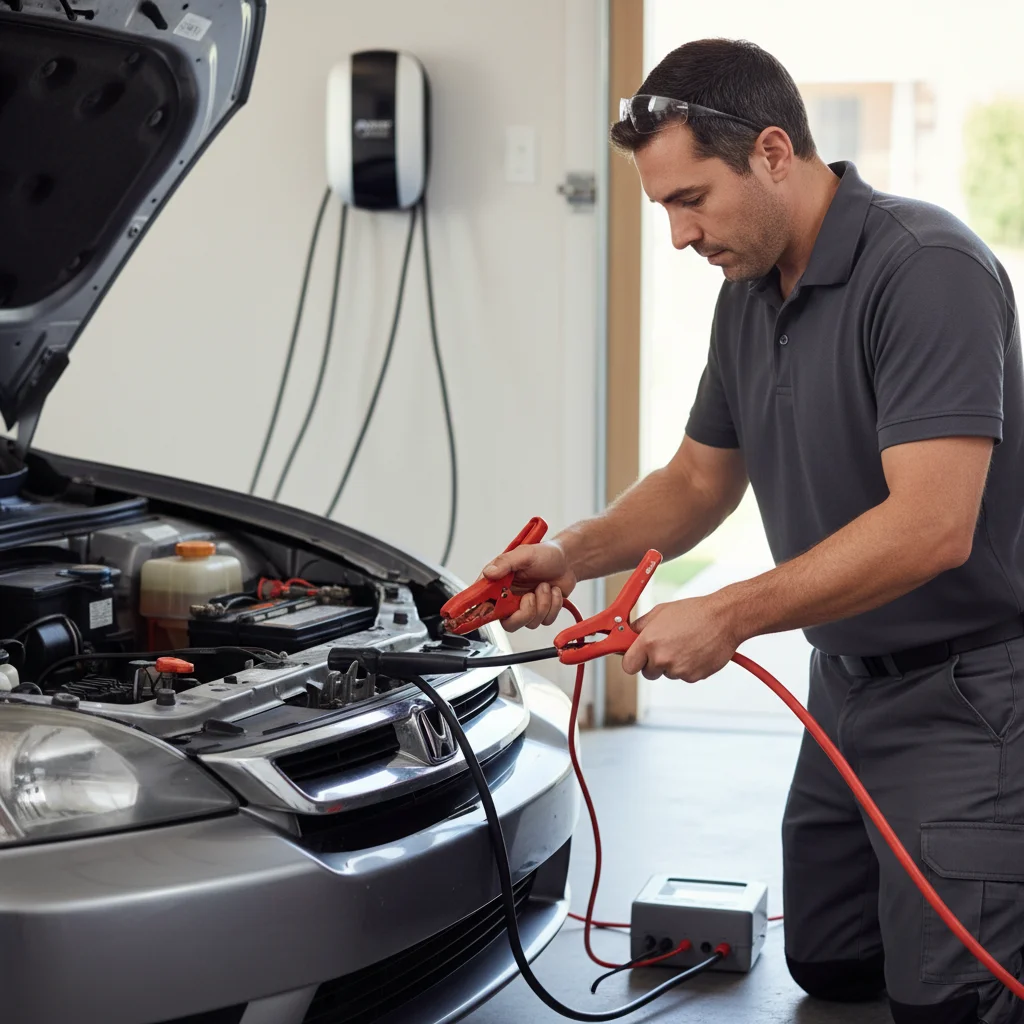
Hood posts first, trunk second
Confirm the 12V location in your owner’s manual for your year and trim. On this car, the useful jump path is the remote posts under the hood. Those posts exist so you don’t need the trunk to restore voltage. Connect a jump pack’s positive clamp to the positive post. Connect the negative clamp to the negative post. Wait a moment, then try to start. Don’t reverse the clamps. Don’t pick a random ground and hope.
If you’ve never jumped an EV 12V, stop and read first. How to jump an EV without frying the 12V is the safety order. A Daytona is still a modern low-voltage network. Wrong polarity is a bad night.
The trunk is the catch. The release is electric. A dead 12V means that latch has no power. Go looking for the battery in the trunk first, and you can get stuck outside the car. Jump at the hood posts. Once the system has voltage, try the normal trunk release. Any manual trunk path, if your trim has one, is in the owner’s manual. Don’t invent one in a dark lot.
Exact covers, labels, and trim panels change by year. Confirm them in the manual before you need them.
Who actually shows up inland
Charge Pro IE is a referral line. It matches stranded EV drivers with independent local mobile rescue operators. The brand performs no work, owns no trucks, and employs no technicians. It sets no prices and publishes no arrival time.
The operators we connect you with can jump or replace a dead 12V on site. They can also bring a 240V Level 2 source to the car. They use a native NACS plug, plus CCS or J1772 adapters for non-Tesla EVs. They typically add 10 to 20 miles of range in 15 to 30 minutes of charging. That’s charging time, never an arrival time. They handle Tesla and every major EV brand, including this Dodge. The operator quotes you before starting and bills you directly.
For a non-Tesla like the Daytona, start on non-Tesla EV rescue. If the pack is the problem instead, use out-of-charge recovery. The person on site should tell those two apart before they clip or plug.
If a jump works and the car dies again soon, stop repeating it. See when an EV 12V dies again after a jump. Replacement is a shop job. Rescue gets you off the shoulder. It doesn’t rebuild the low-voltage system.
Inland roads, utilities, and the wrong call
A silent Daytona in a Hesperia or Victorville lot after Cajon is still a 12V call if the app shows range. The same test holds after a sit near Wildomar or in a Cabazon lot. Dark dash plus healthy app means jump. Motion lost with a low-pack warning means a mobile charge.
Your electric utility won’t fix this. Southern California Edison serves much of the Inland Empire. Riverside Public Utilities serves the city of Riverside. The City of Colton owns the electrical infrastructure inside Colton. Moreno Valley is split between SCE and Moreno Valley Utility. Big Bear Lake and Big Bear City sit on Bear Valley Electric Service. None of those agencies jump a 12V in a parking stall. Home rate plans matter when the car is in the garage. They don’t wake a dead auxiliary battery at the curb.
Frequently asked questions
How do you jump start a Dodge Charger Daytona EV?
Use the remote jump posts under the hood. Confirm their exact location in the owner’s manual. Connect the jump pack positive to the positive post. Connect negative to the negative post. Wait a moment, then try to start. Don’t start by forcing the trunk.
Why won’t the trunk open when the Charger Daytona EV is dead?
The trunk release is electric. With a fully dead 12V, the latch has no power. Restore voltage at the under-hood posts first. Then try the normal release once the car responds. Check your manual for any backup trunk path for your trim.
Can the Charger Daytona EV refuse to start with a full traction battery?
Yes. If the app shows range and the car won’t wake, the pack isn’t the problem. The 12V auxiliary battery is. Charging the main pack or fussing with the charge port wastes time. Jump the 12V first and see if the car answers.
If your Dodge Charger Daytona EV won’t start anywhere in the Inland Empire, call (909) 250-2881. Charge Pro IE will connect you with a local operator. That operator quotes you before starting and bills you directly.