A Cadillac Escalade IQ that won’t start is almost always a weak 12V. The main pack can still hold plenty of miles. That surprise hits hard after a Cajon climb or an I-10 grade. A heavy SUV can feel like it just spent its range. The small battery is what wakes the modules that close the high-voltage contactors. If it can’t, the Escalade IQ stays dark.
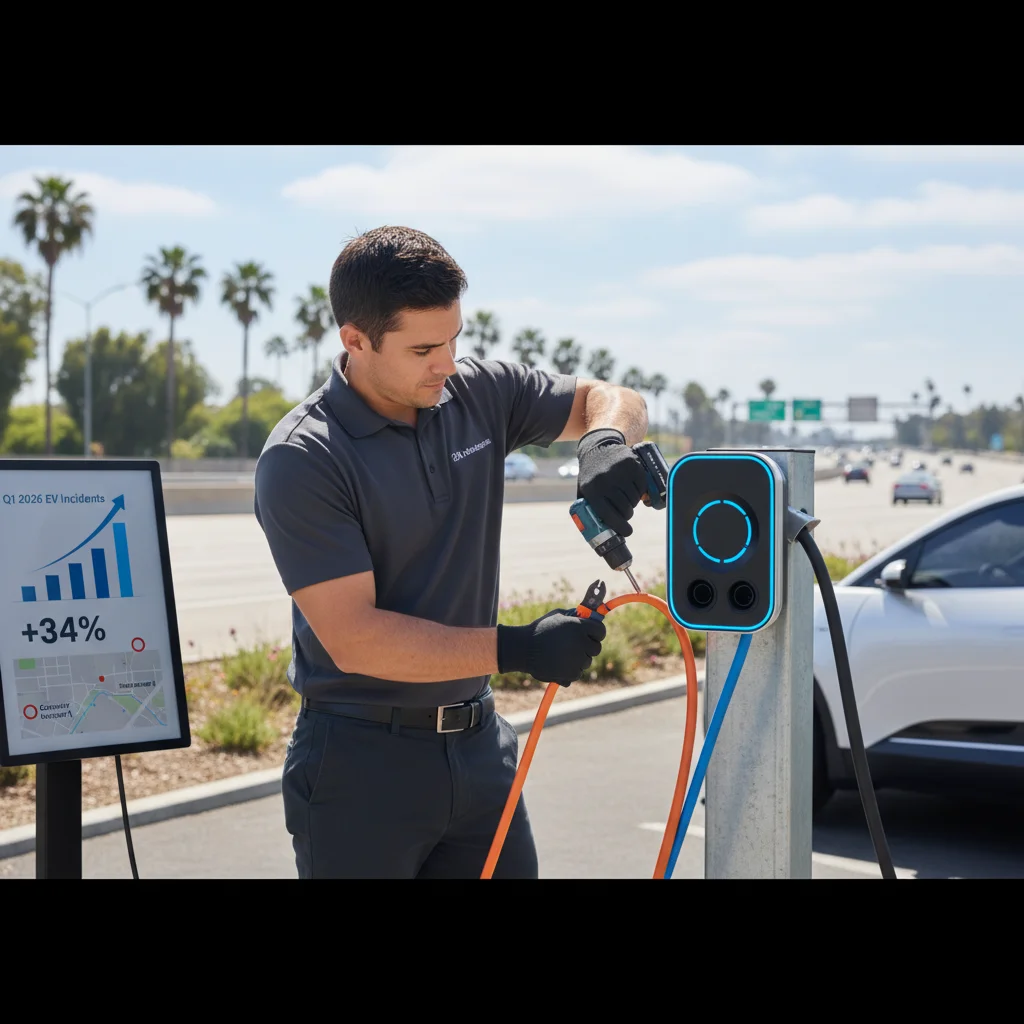
A pass climb can empty your patience, not the pack
The Inland Empire is full of grades that tax a full-size EV. I-15 up Cajon toward Victorville is the grade most owners remember. I-10 through Beaumont and Banning is another. The Ortega near Wildomar adds elevation on a hot afternoon. So do the mountain roads into Big Bear Lake or Lake Arrowhead. I-215 through Moreno Valley still cooks a parked SUV in summer heat. The climb toward Yucaipa does the same after a valley day.
Owners often assume the traction pack is the problem. Sometimes that’s the case, and you need a charge, not a jump. More often the Escalade IQ has simply lost the 12V. That’s the battery that lets the pack talk to the motors.
Weight doesn’t change which battery actually failed. The Escalade IQ is a heavy SUV. Grades cost energy from the pack. They don’t drain the 12V by themselves. What kills the 12V is sitting, heat, and age. You can clear Cajon with miles left. You can still fail to start at a Hesperia curb. You can idle in a Fontana warehouse row. The SUV can go dark with a pack that’s nowhere near empty.
A gas Escalade with a weak battery still cranks, while this one stays silent. The dash can stay black, and the doors may not unlock. The powered hood may not lift either. It looks like a total failure, and it usually isn’t.
If the screens come up with miles still showing, start with the 12V. If the dash lights up with range near zero, you’re out of charge. That’s a different call from a 12V no-start. See what to do on I-15 at the Cajon climb when the pack is actually empty.
What the 12V does on an Escalade IQ
Think of the 12V as the key that unlocks the big battery. It powers the computers that authorize a start. It closes the contactors that connect the pack to the motors. No 12V, no start, even with a healthy Ultium pack.
Cameras, alarms, and always-on connectivity keep sipping that small battery while the SUV sits. A few days in a Chino Hills garage can finish a weak cell. So can a long stay in an Ontario airport lot. Eastvale driveways on new streets see the same overnight drain. The IQ sits between weekend trips. The 12V keeps drawing anyway.
Cadillac calls the front trunk the eTrunk. Most trims use a powered hood that opens from the cabin or the fob. That works when the 12V still has a little charge. A fully dead 12V can leave the hood shut. Check your owner’s manual for the manual eTrunk release. Do that before you assume you need a flatbed.
Once you’re in, GM’s Ultium jump points follow a familiar pattern. You’ll see a marked positive post and a nearby chassis ground. Those aren’t the battery posts themselves, so don’t clip there. Exact placement can change by model year. Confirm the spot in the manual before you clip on a pack.
Give the modules a moment to wake after you connect, then try start. If you’re not sure how to jump an EV 12V, stop first. Read whether roadside help can jump an EV. A wrong clip can cost you more than a wait.
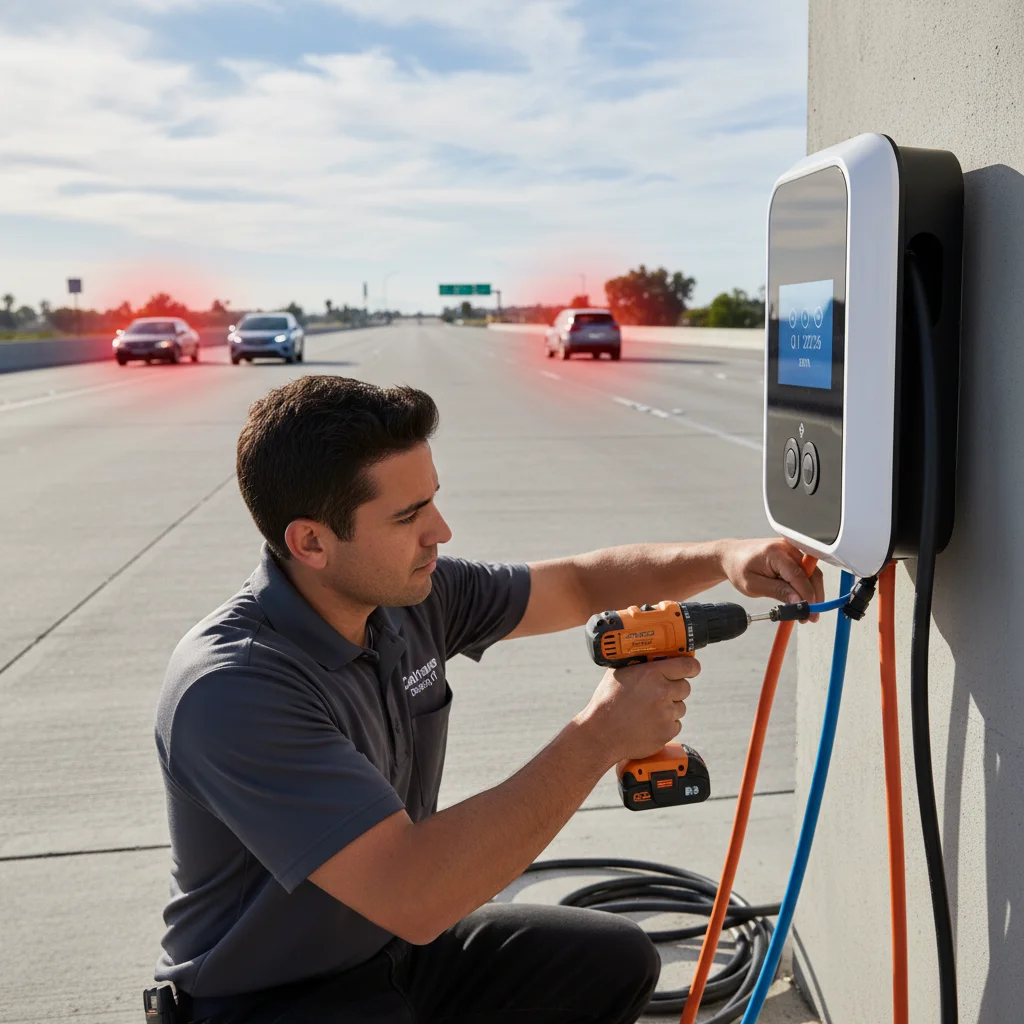
Ultium tech, different bones than a Lyriq
The Escalade IQ uses GM’s Ultium battery and motor family. It doesn’t share the Lyriq’s platform. It rides on BT1, the full-size truck and SUV architecture. That’s the same branch as the GMC Hummer EV and the Chevy Silverado EV. The Cadillac Lyriq sits on BEV3, with the Chevy Blazer EV.
Chemistry and 12V logic are related across both families. The eTrunk, ride height, and jump layout still line up with the heavy trucks. They don’t line up with the crossovers. That matters when someone quotes Lyriq steps from a forum. Hood access and terminal locations may not match.
Symptom and cause at a glance
| What you see | Likely cause |
|---|---|
| eTrunk won’t power open, no dome light, fob silent | 12V fully dead |
| Doors unlock, start button does nothing | 12V low, try a jump |
| Display boots, then goes dark and repeats | Module glitch, try a full 12V power cycle |
| Dash is fine, range near zero | Empty pack, needs a mobile charge |
| Car starts, high-voltage service warning stays on | Ultium fault, needs a dealer scan |
Where this SUV sits long enough to drain
A long idle is the pattern that kills a weak 12V. Warehouse rows in Fontana and Ontario keep a work SUV parked through a shift. Destination lots in Cabazon do the same on a weekend. Event parking in Temecula adds hours of rest in the heat. A long day at Pechanga does too. Hillside homes in Chino Hills sometimes treat the IQ as a second car. A few weeks without a drive can drop the auxiliary battery until the eTrunk won’t open.
Heat across the San Bernardino Valley and the High Desert doesn’t help that small battery. A healthy 12V can sit through a long park, and a failing one can’t.
If the pack is actually empty, you need energy in the traction battery. You don’t need a 12V jump. The non-Tesla EV rescue operators we connect you with can help. They bring a 240V Level 2 source to the curb. They typically add 10 to 20 miles of range in 15 to 30 minutes of charging. That’s charging time, never an arrival time. The operator quotes you before any work starts and bills you directly.
Charge Pro IE is a referral line. It doesn’t own trucks, employ technicians, set prices, or publish hours. The pros we send handle Cadillac and every major EV brand. They can jump or replace a dead 12V on site when that’s the real fault.
If the jump doesn’t wake it
A proper 12V jump that still leaves the SUV dark isn’t a curb fix. An active high-voltage service warning isn’t either. That needs a dealer scan tool. The operator can confirm whether the 12V is the issue. Do that before you commit to a tow on a vehicle this size.
If the 12V keeps dying after it starts, that battery is likely worn out. See the signs in our EV 12V battery replacement notes. Plan a swap instead of another jump next weekend.
Frequently asked questions
How do you jump a Cadillac Escalade IQ?
Use the interior release or fob to open the eTrunk. If the powered hood won’t move, find the manual release in your owner’s manual. Connect a lithium jump pack to the marked positive terminal and a nearby chassis ground. Don’t clip the battery posts themselves. Let the system sit before you press start. Confirm terminal locations for your model year before you connect.
Can the Escalade IQ refuse to start with a full pack?
Yes, the Ultium pack and the 12V are separate. A full traction battery can’t close its own contactors on its own. The 12V has to power the modules first. Plenty of range on the last drive doesn’t prove the 12V is healthy.
Is the Escalade IQ the same platform as the Lyriq?
No. Both still use Ultium technology. The Escalade IQ is on BT1 with the Hummer EV and Silverado EV. The Lyriq is on BEV3 with GM’s smaller crossovers. The no-start logic is similar, and the hardware layout isn’t.
Call Charge Pro IE at (909) 250-2881 if your Escalade IQ won’t start in the Inland Empire. We’ll connect you with a local operator. That operator can quote the 12V jump or a mobile charge before any work begins.