When a public charger says connected but not charging, believe the car. The stall confirmed a plug, and it didn’t confirm current. On Inland Empire lots, that’s a stalled post, not a dead pack.
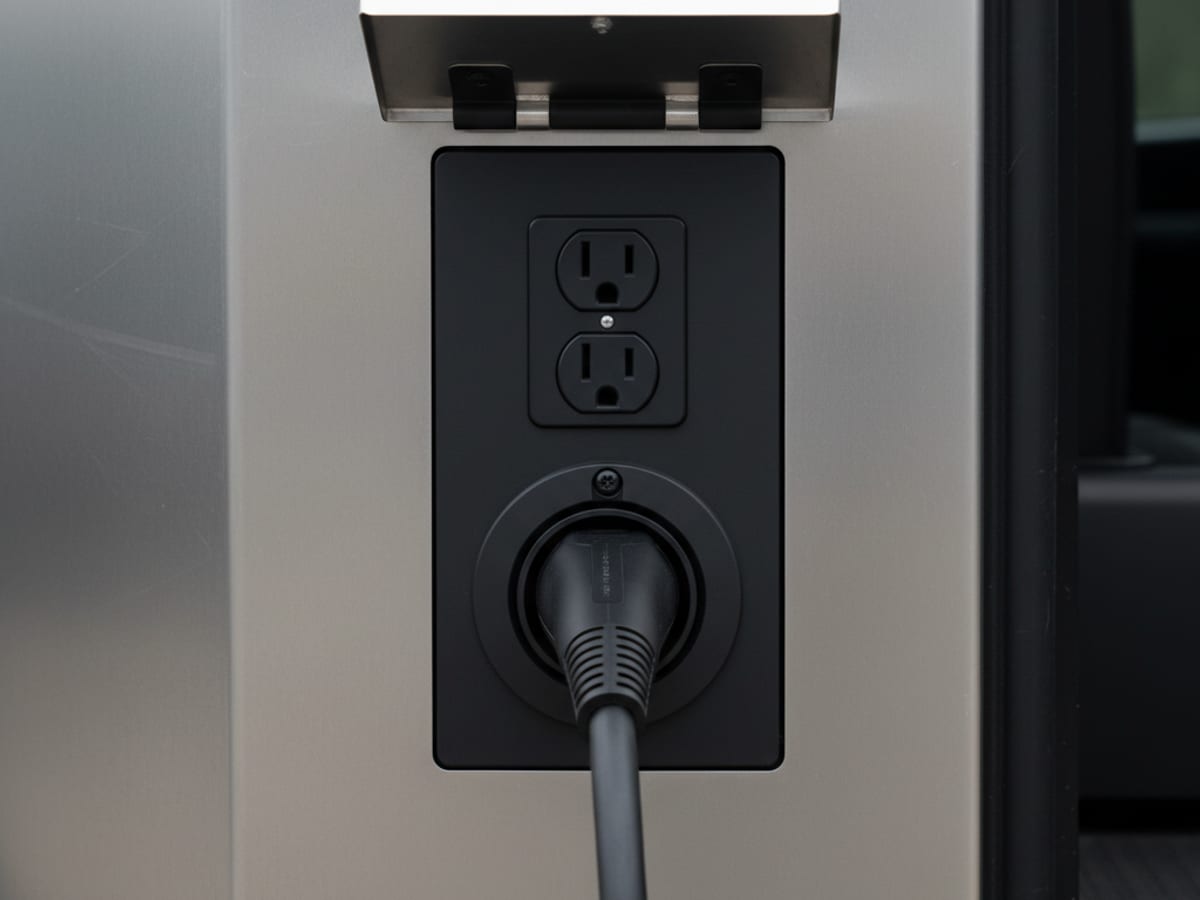
Read the dash before you touch the kiosk
Your car’s charging screen watches real current, not the kiosk. The kiosk watches the connector and a first network ping. If kilowatt-hours on the dash haven’t moved, the session never released power. Staring at the stall won’t change that.
This mismatch shows up in warehouse rows around Fontana and in Ontario airport lots. It shows up at plazas along I-10 through Colton and Redlands. You’ll see it downtown in Riverside and on I-215 through Moreno Valley. The city changes, and the two-screen fight does not.
A fully dark car is a different case. If nothing wakes, start with the 12-volt. If the screens are up and the handle is in, you’re still in session trouble.
Connected only means the plug landed
A networked Level 2 stall or DC fast charger finishes three jobs. It has to see the car, then clear payment or your account. Then it has to send power, and connected only covers the first job.
The kiosk can flash connected, or even charging, the moment it feels the plug. The billing system often lags, so your pack waits for actual current. Two screens run on two clocks, and that’s the usual version of this problem.
Tesla Superchargers do this dance, and ChargePoint, EVgo, and Electrify America do it too. The logo on the post doesn’t skip those steps.
Your home utility doesn’t run that handshake. Riverside homes sit on Riverside Public Utilities, not SCE. Colton owns its electric system inside city limits. Banning is served by City of Banning Electric Utility. Big Bear Lake and Big Bear City sit on Bear Valley Electric Service. Fontana, Ontario, and San Bernardino are mostly Southern California Edison. Moreno Valley is split: SCE plus Moreno Valley Utility in newer tracts. Rancho Cucamonga is mostly SCE, with a municipal pocket at Victoria Gardens and The Enclave. That pocket also covers Day Creek Square and The Resort. A public stall still talks to the charging network, not your city’s meter.
Work the app before you work the cable
Open the network’s app and find this session, not last week’s. If status is pending, give it a couple of minutes. If it shows failed or declined, stop blaming the handle, because that’s payment.
End the session in the app, then start a new one from the phone. Poking the kiosk again usually repeats the same stuck request. A phone restart forces a new authorization.
EV charging apps help you see that status before you burn more range.
If the app already shows an active, paid session, then look at the hardware. Unplug all the way and reseat until it latches. A lazy seat can block current after the network thinks it’s done. If you’re using an adapter, reseat that too. The kiosk can call the session live while the adapter sits half-home.
Some cars also need charging enabled in the vehicle app. If the car is in a don’t-charge profile, the stall can still say connected. Flip that setting and retry.
Try another card in the app, since expired cards fail quietly. The kiosk can still say connected after a silent decline. An RFID fob, if you carry one, is a second path.
What those two screens are telling you
| What the kiosk shows | What your car shows | Likely cause | What to do next |
|---|---|---|---|
| Connected | No kWh movement | Authorization still pending | Wait a couple of minutes, then check the app |
| Charging | No kWh movement | Stalled handshake after an early kiosk update | End and restart from the app |
| Charging | kWh crawling | Shared cabinet, another stall drawing more | Stay put, or move to an open adjacent stall |
| Error or blank | Nothing | Hardware or network fault | Move to another stall or another site |
| Connected, app declined | Nothing | Payment or account issue | Switch cards, or use RFID if you have it |
Some DC cabinets split power across stalls, so slow charging can be that split. Zero charging after a restart is not.
Know when this stall is actually broken
Restart from the app, reseat the plug, and confirm the session is paid. If the dash still shows zero, that stall is done. Don’t keep sending the same request. Take the next stall. If that one fails too, treat the site as down and leave.
That’s the jump from a stuck session to a public charger that isn’t working. Heat on inland asphalt can make a flaky session worse. A packed Tesla row can too, including Calimesa Supercharger stalls that are full or offline. None of that means your traction pack died. It means the post never finished.
Warehouse and airport parking add their own mess. Long rows and weak cell signal can freeze a kiosk on connected. That’s a network reach problem around Fontana warehouse lots and Ontario airport parking. Bad signal isn’t a dead pack either.
If you’re already low, stop gambling on this post
Minutes at a dead session are minutes your range isn’t climbing. If you’re already thin on I-15 toward Victorville, decide now. Same if you’re on the 91 in Corona or on I-10 toward Yucaipa. Don’t wait for a kiosk to change its mind.
What to do before you strand is the decision guide. Hopping to another site only helps if you still have the miles.
If you can’t reach a working stall, mobile EV charging is the other option. Charge Pro IE is a referral line that matches stranded drivers with independent local operators. The pros we connect you with bring a 240-volt Level 2 source. Tesla gets a native NACS plug, and other EVs use CCS or J1772 adapters. They typically add 10 to 20 miles in 15 to 30 minutes of charging. That’s plug time, not a clock on arrival. The operator quotes you before any work starts, and they bill you directly. Charge Pro IE doesn’t own trucks or set the price. It doesn’t do the work.
Call (909) 250-2881 when you want that match. You’ll get connected with a local operator, not a branded fleet.
Frequently asked questions
Does connected mean the pack is taking power?
Connected only means the stall saw the plug. Power comes after payment clears and current actually flows. Trust the dash for that.
Could this be a dead Inland Empire pack?
Not if the car is awake and the displays work. A dead traction pack doesn’t sit there in a connected session. A dark, silent car is the 12-volt path.
What if I don’t have miles left for another stall?
Stop feeding the same kiosk and ask for a mobile Level 2 visit instead. The operator quotes you before starting, then bills you directly.