If your EV is dying on I-10 through Redlands, take the right shoulder. Hit the hazards before you’ve finished rolling to a stop. Stay with the car. Don’t gamble the eastbound climb on leftover range. Redlands is still valley driving. East of town, I-10 starts spending watts on grade. An independent operator can bring a 240V Level 2 source to the car. Typical added range is 10 to 20 miles. Expect 15 to 30 minutes of charging once they’re hooked up. That’s charging time, not a promise of when someone arrives.
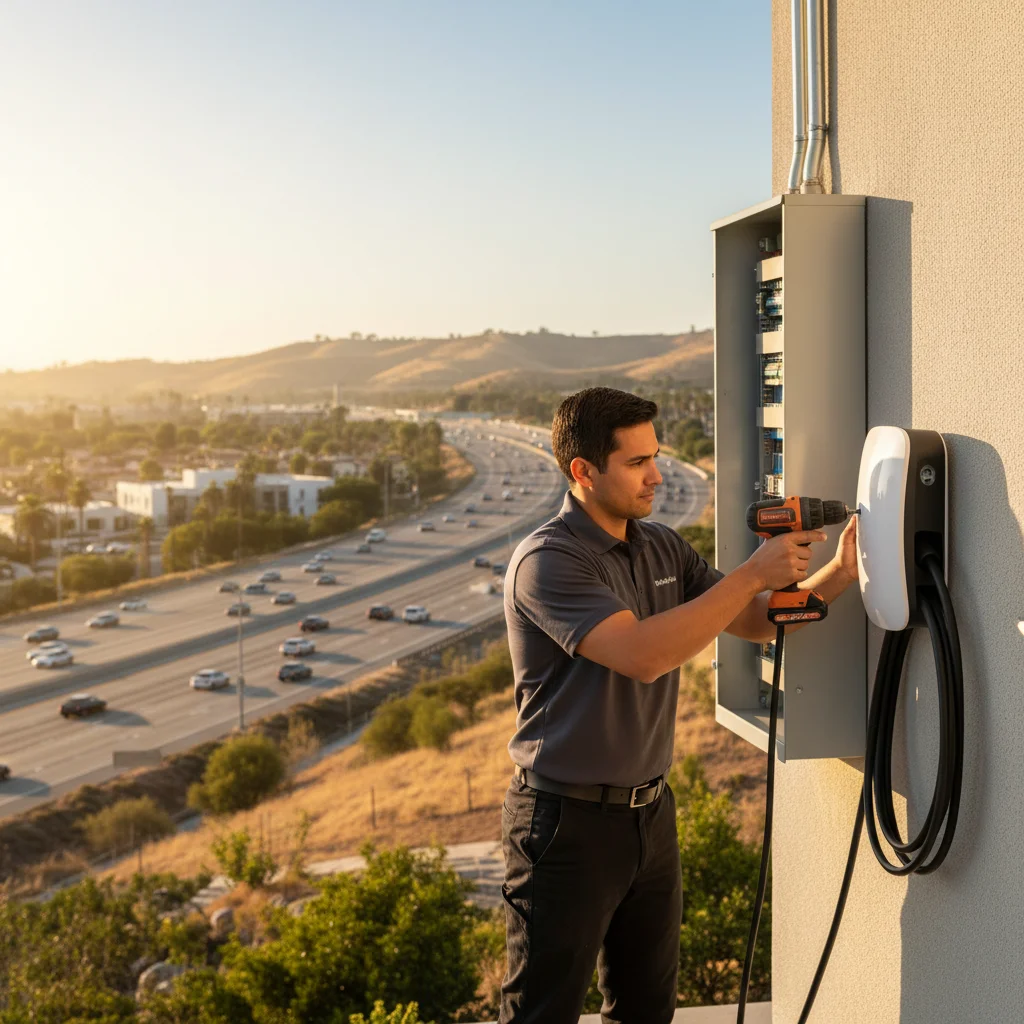
Redlands is valley floor until it isn’t
I-10 through Redlands feels simple if you just came from Colton or Loma Linda. The pavement is wide. Exits come often. Alabama Street, Orange Street, and Redlands Boulevard all drop you back into town. That comfort is the trap. The city sits a little higher than the San Bernardino Valley floor. Southern neighborhoods already climb into the Smiley Heights hills. Range that looked fine on Barton Road can shrink with the air running.
Summers here run hot. Cabin cooling on a July afternoon isn’t a rounding error. A buffer you set on a cool State Street morning often vanishes by midafternoon. The car isn’t lying. The load changed.
Redlands had 73,375 residents in the ACS 2019-2023 count. The 2024 estimate is 74,279. It’s an old, affluent city in San Bernardino County. ACS 2019-2023 puts 60.4% of Redlands housing before 1980. Victorian and early twentieth century homes on large lots are the postcard. They’re also a hundred-year-old electrical service. Plenty of owners still leave on leftover overnight range. The panel work at the house often isn’t done. Southern California Edison serves Redlands. That doesn’t put a Level 2 plug in a pre-war garage by itself. The first empty-pack stall of the day is often that driver. They meant to charge at home, didn’t, and treated I-10 like a short hop.
Long-dwell parking does the same damage. The University of Redlands district keeps cars sitting for hours. So does historic downtown and the Redlands Bowl. Lots near the Lincoln Memorial Shrine or Kimberly Crest House do too. You walk back. The indicated miles look close enough. You merge onto I-10 east. Then the climb starts collecting.
Citrus groves and old packing-house streets still shape the east side. Mentone sits on that edge. Crafton does too. From those neighborhoods, I-10 looks like an easy merge. It isn’t, not with a thin pack and the air on. For help already in town, see EV roadside assistance in Redlands. The EV charging in Redlands city page maps the rest of this place.
The I-10 climb, and the mountain road that starts here
Eastbound I-10 is the range problem most drivers underestimate. Redlands is the last stretch that still feels like the valley. Calimesa is the next city fabric to the east. After that, the road keeps rising toward Beaumont and Banning. Watts leave because the pavement is going up. Heat is already in the cells. A few percent in Redlands isn’t a plan for the eastbound miles. That’s how people stall with the mountains in the windshield.
Westbound is a different pattern. Drivers coming off the pass sometimes think regeneration will refill what they spent. It helps. It rarely refunds the whole climb. If you already used the buffer getting into town, the crawl can finish you. Loma Linda or Colton shoulders see that westbound ending.
North of the freeway, SR-210 cuts across Highland and the Terrace. South, Barton Road ties Redlands to Loma Linda. Those aren’t mountain roads, but they aren’t flat either. Smiley Heights and South Redlands punish a low pack on short hills. The estimate drops faster than the map distance.
Then there’s SR-38. That road starts in Redlands. It’s the long, scenic way toward Angelus Oaks and Big Bear. It climbs without much relief. Onyx Summit sits over eight thousand feet. Beautiful drive. Brutal on a battery you didn’t fill on the valley floor. The Arrow Route toward the mountains has the same logic. Leaving Crafton, Mentone, or Lugonia with a thin pack means turn around. Don’t see how it goes on the way up.
Yucaipa sits east and up as well. A hop that looks short still spends range you counted as spare. Downtown Redlands to that climb isn’t a cooldown lap.
Weekend mountain traffic is its own pattern. SR-38 is the long way on purpose. Folks leave downtown after breakfast and skip a top-up. Then they start climbing toward Angelus Oaks. The groves look pretty from the first miles. Pretty doesn’t put watts back. If the estimate is already nervous on Lugonia, skip SR-38.
None of this is a reason to sit in a live lane. If you’re already on empty, get stable. Then add miles where you sit. Out-of-charge recovery is the service for that stall. A tow isn’t the first move.
If you can still roll a little
A car with a few percent at Orange Street can still make a lot. A car you keep in a center lane cannot. If the car will still move, take the next exit and park. Alabama, Orange, and Redlands Boulevard are the exits people actually use. Don’t thread downtown looking for a perfect stall. Any legal lot beats a freeway lane.
If the car is already done, don’t restart it to try for the exit. That’s how a 12V sag becomes a dark dash on a narrow shoulder. Get right. Stop. Stay put.
Surface streets have their own dead-end. Lugonia Avenue looks like a way to sneak around the freeway. Barton Road looks like a shortcut to Loma Linda. Both spend range in traffic lights and grade. If you’re already flashing empty, don’t invent a surface-street save. Park and call.
Dead pack, or a 12V that took the car with it
A lot of I-10 stalls aren’t an empty traction pack. They’re a 12V that collapsed while you were parked. Downtown, the university, and Crafton driveways all see it. The dash stays dark. Handles don’t wake. It looks like the whole car died. The high-voltage pack can still have range.
If the displays are on and it says empty, treat it as range. If nothing wakes, treat it as a 12V problem first. This guide to telling a dead Tesla pack from a dead 12V covers the difference. Operators in the network can jump or replace a 12V on site. They handle Tesla and every major EV brand. Don’t keep cycling the car on the shoulder. That can deepen a 12V sag.
A car at 2% that’s still in drive is one job. A car that won’t unlock is another. Say which one you have when you call.
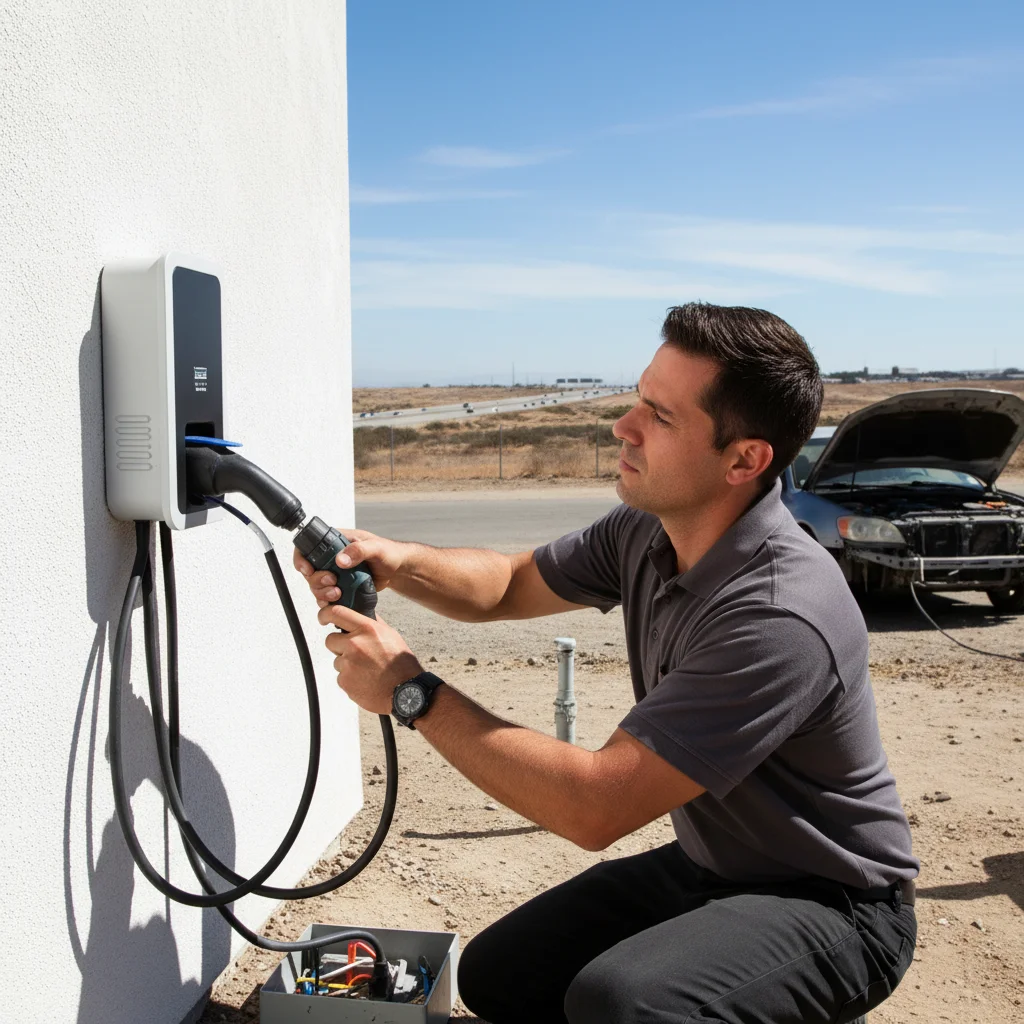
Shoulder protocol on I-10 through town
I-10 through Redlands is fast, even inside the city limits. A stalled EV in a travel lane is the dangerous version of this story. The pack can wait. You can’t.
Move right as soon as the car warns you it’s done. Don’t coast hoping the next exit is Orange or Alabama. If you can make an exit at a walking pace, take it. If you can’t, the right shoulder is the plan.
Use every inch of pavement on the right. Hug the fog line, a barrier, or the dirt verge. Get all four tires out of the live lane if you can. Some stretches are generous. Some aren’t. Don’t assume.
Hazards go on while you’re still moving over. Traffic behind you needs the warning before you’re stopped.
If you’re on the right shoulder, leave through the passenger side. The driver’s door puts you in the traffic gap. Stay behind the right rear corner. Don’t walk the shoulder toward an off-ramp to hunt a plug.
Call 911 if you’re blocking a lane or the shoulder is narrow. Call if you can’t tell whether you’re still in Redlands. East toward Calimesa counts too. Give the nearest exit and your direction of travel. A mile marker helps if you see one. Orange, Alabama, Redlands Boulevard, and SR-210 are landmarks people know.
Then stay with the vehicle. A freeway shoulder isn’t a place to go looking for a plug on foot. Heat, traffic, and the eastbound grade all argue for waiting.
If you limped off and died on a surface street, that’s still a rescue. Downtown, Lugonia, and university lots all see that ending. The operator still comes to you. You still don’t push the car.
Night doesn’t change the order. Hazards, shoulder, passenger door, stay put. Mentone and Crafton feel quiet. Quiet isn’t the same as safe to walk.
What the operator actually brings
Charge Pro IE is a referral line. We don’t own the truck, and we don’t do the work. We match you with an independent local mobile rescue operator. That operator quotes you before anything starts, and bills you directly. Nobody here publishes an arrival time. Traffic on I-10, SR-210, and surface streets through Redlands doesn’t care about a promise.
What the operator brings is a 240V Level 2 source. Teslas take a native NACS plug. Other EVs use a CCS or J1772 adapter. This isn’t a Supercharger on wheels. It’s enough energy to get you off the shoulder. Then you can finish charging at a real plug. Typical added range is 10 to 20 miles. That’s after 15 to 30 minutes of charging time. Charging time isn’t travel time.
That window is why you call before you point east at Beaumont. Ten to twenty miles can be a controlled roll to a plug. Or a second stall on the climb. For the visit itself, read what a mobile EV charging rescue actually is.
If the 12V is the failure, the operator can work that on site. If the pack is empty, it’s a charge. If you need a tow instead, say so. Don’t assume a hook is the first move. The car may only need kilowatts.
What to say when you call
Clean location data is the whole job at the start. “I-10 eastbound in Redlands, right shoulder, just past Alabama Street” is usable. “Somewhere by the 10” isn’t.
Give direction of travel. Eastbound toward Calimesa is a different problem than westbound toward Loma Linda. If you’ve already left the freeway, name the surface street. Redlands Boulevard, Orange Street, Lugonia, Barton Road, or the university area all work.
Year, make, model, and color. Connector type if you know it. Tesla, Hyundai, Kia, Ford, Chevy, Rivian, and BMW all show up here.
Give a percent if the screen is alive. Say nothing wakes if it isn’t. Say if you’re on a shoulder, in a lot, or in a lane.
Road context: tight shoulder, blind curve, night, heat, kids in the car. The operator needs that before they roll.
Don’t wait for the indicated range to hit zero if you’re already shaking. A car at 3% east of Orange Street is already in the decision. Pull off. Get stable. Then add miles.
Frequently asked questions
What should I do first if the EV dies on I-10 in Redlands?
Get onto the right shoulder, hazards on, passenger-side exit, stay with the car. Call 911 if you’re in a lane or the shoulder is tight. Then get a mobile Level 2 charge rather than aiming east on leftover miles. Redlands still feels like valley driving. The climb after it doesn’t.
Can a roadside charge get me up the grade toward Beaumont?
The operator adds 10 to 20 miles in 15 to 30 minutes of charging. That’s often enough to reach a proper plug instead of dying on the grade. It isn’t a full recharge. Don’t treat it as permission to start SR-38 on a near-empty pack. Fill while you’re still on the valley floor.
My Redlands house is old. Is that why I keep leaving on empty?
It can be. ACS 2019-2023 puts 60.4% of Redlands housing before 1980. Older service in those homes often delays a Level 2 install. SCE serves the city, but the panel is still the panel. Until that install exists, don’t leave on leftover range and point east.
If you’re on the shoulder in Redlands right now, call Charge Pro IE at (909) 250-2881. We’ll connect you with an independent operator. They quote the job, bring 240V to the car, and bill you directly.