You clear Cajon on I-15, and the grade finally eases. The pack’s already thin. Then Hesperia’s High Desert miles start. Those miles are what finish a lot of low batteries.
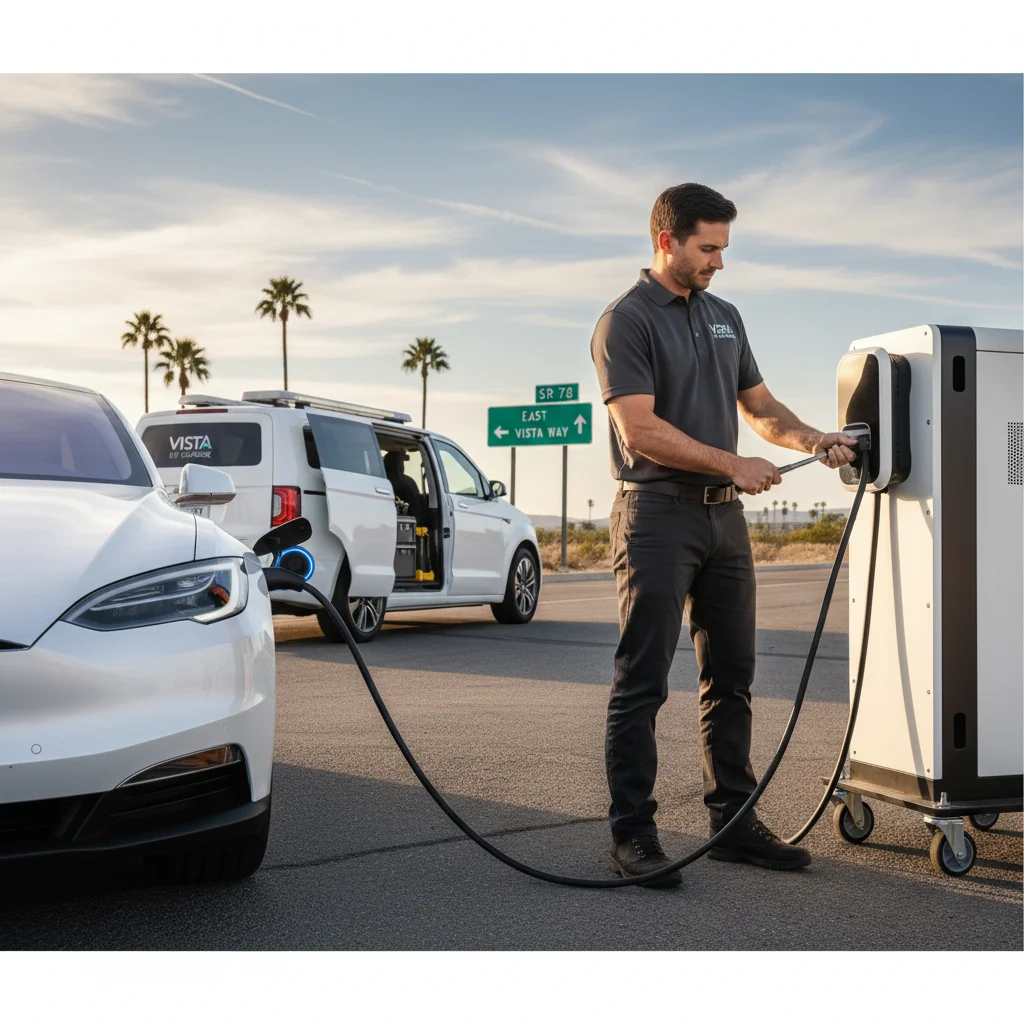
The pass ends at Main Street. The drain does not.
Caltrans maps I-15 chain control from Devore through to Main Street in Hesperia. That line is where the mountain section ends. Your battery doesn’t get a reset there. A northbound driver who burned range on the climb often rolls in already low. A southbound driver who banked on regen can still come up short.
Hesperia’s the first town at the top of the pass. It sits in San Bernardino County at roughly 3,200 feet. That’s a bit higher than Victorville. The National Weather Service names Cajon Pass among Southern California’s strongest Santa Ana wind spots. That wind reaches Hesperia hard. High desert heat and high desert cold both live at this elevation. Either one can eat a buffer you thought you still had.
If you stalled on the grade, start with the Cajon climb out-of-charge notes. The city pattern is what happens after you clear the interstate.
A huge footprint after you exit
Hesperia covers 72.68 square miles. Downtown along Main Street is one kind of stop. Ranchero, Mesa Linda, and Summit Valley are another. Oak Hills sits on the western edge. Rural parcels east toward the Mojave River can sit far down an unpaved road. Clearing I-15 isn’t the same as being in the driveway.
Ranchero Road runs over to the freeway from a wide slice of town. Drivers peel off thinking they’ve got enough for home. Then Bear Valley Road, Hesperia Road, or Escondido Avenue is still ahead. US-395 cuts the High Desert side of this map. Main Street is the downtown spine.
ACS 2019-2023 counts 100,775 residents here. The 2024 estimate is 101,836. ZIPs you might say on the phone include 92344, 92345, and 92392. Give the operator a pin and a cross street. Hesperia alone isn’t a location.
There’s a 20-stall Tesla Supercharger on Main Street. Electrify America has a site at the Walmart. Use them when you can still roll. A public stall doesn’t help a car that already stopped. The story here is the climb plus the spread. It’s not a missing plug in town. The Hesperia city page is the local hub for layout.
Stay put on I-15. Don’t hunt one more mile.
Between Devore and Main Street, I-15 mixes heavy trucks, real grades, and limited safe stopping. If you’re already on the shoulder, stay there. Turn on your hazard lights. Get out of the travel lane if you can do it safely. A thin pack plus one more exit can leave you in a worse spot.
Once you’re off the interstate, the failure points shift. A Ranchero driveway after a long day. A Bear Valley Road errand that ran long. An Oak Hills address after a last mile that looked short. Neighbors include Victorville, Apple Valley, Phelan, and Summit Valley. You might be on the Victorville side of Bear Valley Road.
Help at the car is EV roadside assistance: a match to a local operator. It’s not a shop visit. It’s not Charge Pro IE rolling a truck. Independent operators do the work.
SR-138 when the 15 is the wrong road
SR-138 west toward Silverwood Lake State Recreation Area is a long, high two-lane. It gets snow and chain controls. Drivers use it as a Cajon Pass alternative when I-15 is closed. A lake day can leave you thin on a road that isn’t the interstate. A detour toward the Antelope Valley has the same risk.
Hesperia Lake Park and the Hesperia Golf and Country Club are easy to name. They’re not the usual stop. The Mojave River corridor on the east side is a longer, quieter last stretch. So is any dirt road after a day that already included the pass.
Phelan sits farther west. Oak Hills is the western edge of this city. Summit Valley sits on this city’s south side. Those addresses still get filed as Hesperia by a lot of drivers. They’re not downtown Main Street. Plan the last miles as their own trip, not as a footnote after Cajon.
High Desert rescue is its own pattern. See mobile EV charging across the High Desert if you’re past town.
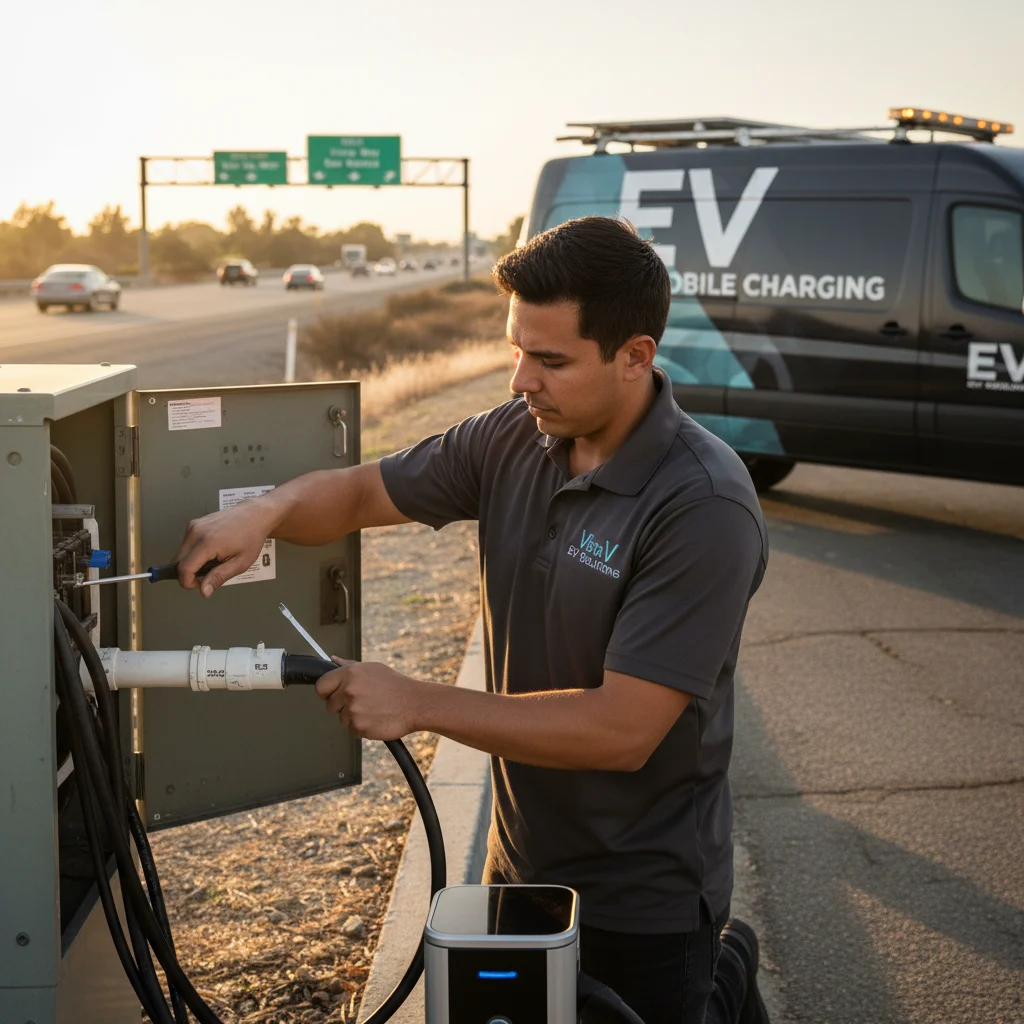
What the operator brings, and what this line isn’t
Charge Pro IE is a referral line. It holds no license, owns no trucks, and employs no technicians. It matches stranded EV drivers with independent local mobile rescue operators. The operator quotes you before starting and bills you directly.
The pros we connect you with bring a 240V Level 2 source. Tesla owners get a native NACS plug. Other EVs get a CCS or J1772 adapter. A typical hookup adds 10 to 20 miles of range. That takes 15 to 30 minutes of charging. That clock is charging time. It’s not an arrival window. Nobody on this page can promise when a unit shows up.
They also jump or replace a dead 12V battery on site. Teslas and every major EV brand still need that small battery. It wakes the car. A dark dash at home is often the 12V. A zero on I-15 after Cajon is often the pack.
Read what a mobile EV charging visit actually is if you want the sequence. Use the mobile EV charging page if you already need pack energy.
Pack empty, or the 12V just died
If the screens are dark and the handles won’t pop, think 12V first. That little battery runs the computers and the locks. A jump on site can wake the car. If it dies again soon after, you likely need a replacement, not another bump.
If the car is awake and the range reads zero, you need pack energy. A mobile Level 2 visit can add enough miles to reach a charger you pick. A tow is the other path when the car won’t accept charge. The operator should say so on site. Don’t pay for a session that can’t work.
Southern California Edison serves Hesperia homes. That matters for a wall unit in the garage. It doesn’t power a rescue on I-15. A failed overnight charge still leaves you with a car in the driveway. That can be a 12V problem or a tripped breaker. It can also be a pack you never filled.
High desert heat lives at this elevation. Cold nights at 3,200 feet are real here too. Both can surprise a range estimate that looked fine before the climb. Wind through the pass is the third variable. Santa Ana winds are a named risk on this corridor.
When to call for a match
Call when you can’t roll to the Main Street Supercharger. Call when you can’t roll to the Walmart Electrify America stalls. Call when the 12V has killed wake-up. Call from I-15, US-395, Ranchero Road, or a dirt last mile. Call when the estimate just hit zero.
The next city north has the same pass in its rearview. The Victorville roadside post covers that side of Bear Valley Road.
Charge Pro IE refers across the Inland Empire. The operator who takes the job is independent. They set the price. Ask for the quote before they plug in.
Call (909) 250-2881 when you need a local operator matched to you.