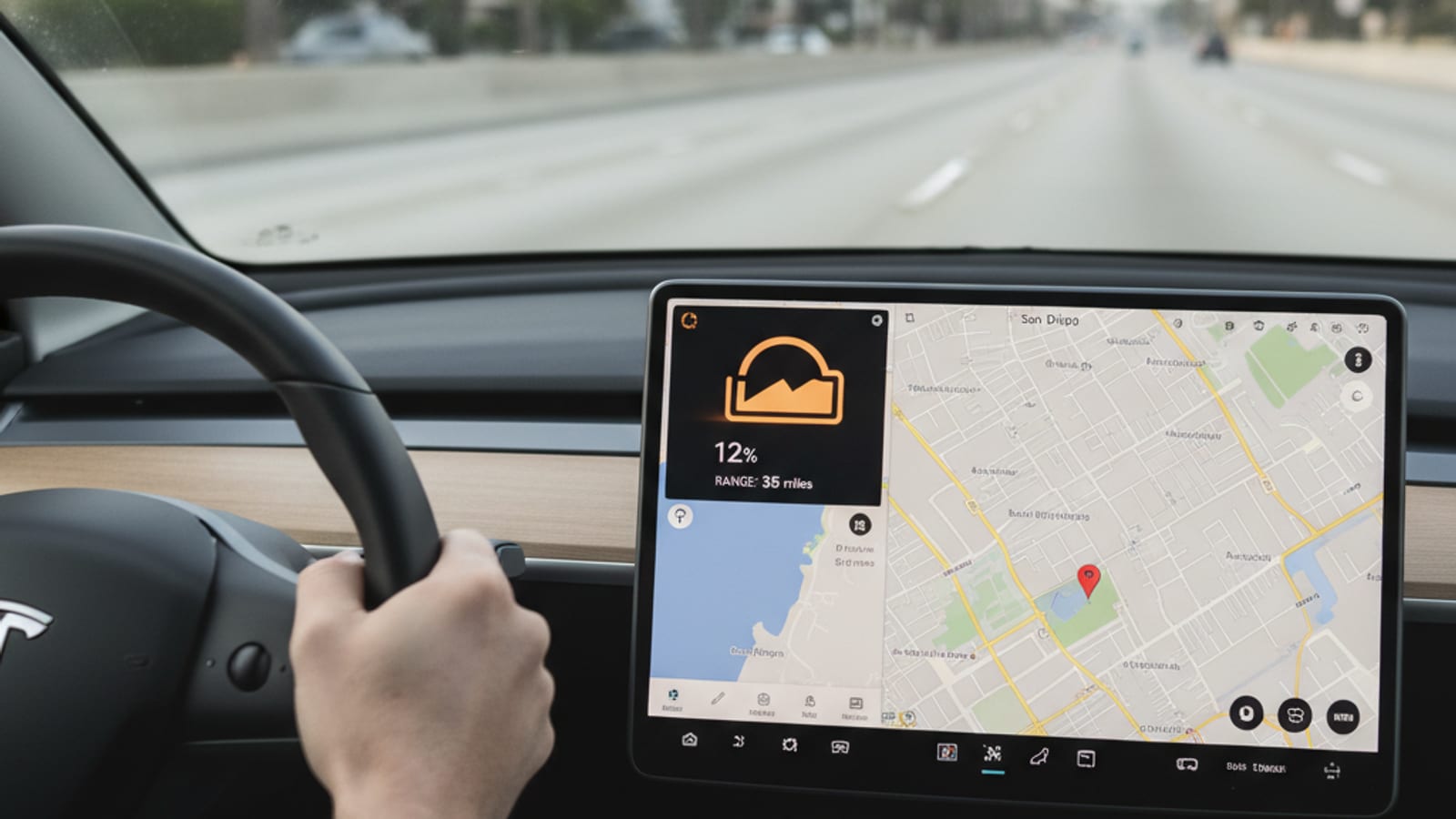
Range anxiety in the Inland Empire is remaining miles against a real climb. It shows up on the Cajon grade toward Victorville. It shows up on I-10 through Banning. It shows up on High Desert miles around Adelanto and Phelan. Searchers want a county EV count that makes that official. No verified ZEV total turned up for Riverside or San Bernardino County. Tesla’s published share for these two counties wasn’t in the sources we can cite. The solid local facts are population, housing age, who sells the power, and the roads themselves.
The ZEV number the files don’t give you
Riverside County’s ACS 2019-2023 population is 2,478,600. San Bernardino County’s is 2,197,104. That’s a large daily driving market. It’s not a zero-emission fleet count. If you need registrations, open the California Energy Commission’s ZEV tools. Then check the DMV vehicle population reports. Tesla’s investor materials track company-wide deliveries. They don’t publish a Fontana, Ontario, or Temecula share we can repeat.
Four inland driving days, not one
These two counties aren’t one commute. They mix valley freeways, pass climbs, mountain towns, and High Desert cities with huge land area.
The valley floor is work and heat. Fontana’s ACS population is 214,169. Ontario’s is 180,547. Riverside city’s is 319,069. Moreno Valley’s is 211,666. San Bernardino city’s is 222,724. Those trips stack on I-10, I-215, and SR-60. HVAC on a slow afternoon uses energy the window sticker never showed.
Then the map stretches. Apple Valley is about 77.0 square miles of land. Victorville is about 73.7. Hesperia is about 72.7. Phelan is about 60.1. Adelanto is about 52.9. Those Census figures are land area, not a plug map. They explain why a local loop can chew a buffer you thought was safe. Out of charge on empty High Desert miles near Adelanto is the High Desert read. Out of charge on I-15 at the Cajon climb toward Victorville is the pass read. Climbing spends energy. Descent regenerates some. It doesn’t give the climb back.
I-10 tightens again through Colton, Redlands, Beaumont, and Banning. Yucaipa sits on a grade off the valley floor. I-215 through Moreno Valley and Perris is fast and exposed. SR-60 through Jurupa Valley is freight and commuting. The Ortega near Wildomar is a two-lane mountain road.
Lake Arrowhead, Crestline, Running Springs, Big Bear City, and Big Bear Lake sit above the inversion. Wrightwood has its own approach. The climb costs range. If you start down already short, the last miles are the ones people remember.
This page won’t invent a percent of range lost to heat or speed. Summer HVAC and highway pace both cost more than an EPA test loop. How to care for an EV battery in Inland Empire heat covers pack care in this climate. How long a Tesla charge lasts through an Inland Empire day does the same for Tesla owners. Use your own kWh-per-mile history. That figure matches your route.
Older housing, newer streets, and who wakes up charged
Range anxiety often starts the night before. A car that left home full handles a pass better than one that woke low. Home charging isn’t evenly available across these counties.
On ACS 2019-2023 figures, 43.8% of San Bernardino County housing was built before 1980. Riverside County was 30.2%. Eastvale is 2.2% pre-1980. French Valley is 2.3%. Temecula is 6.5%. San Bernardino city is 60.9%. Ontario is 50.7%. Crestline is 77.7%. New Eastvale streets were wired in the EV era. Older San Bernardino and Ontario buildings often share panels and long feeder runs.
Older Inland Empire panels and EV chargers: what fails first is the building-side read. You get a tripped breaker. You get a service that can’t take a new 240-volt circuit. You get a landlord who never planned for one. A national percent of EV owners without home charging wasn’t in the verified set. Don’t treat a guessed share as local. Ask the property manager. Look at the panel.
High Desert housing is a different story. Victorville’s pre-1980 share is 19.6%. Adelanto’s is 18.3%. Hesperia’s is 30.0%. Those cities are newer than the old valley cores. Anxiety north of Cajon is usually the miles and the grade. It isn’t a 1960s panel. The wall charger is the hard part.
Who sells the power, because that’s the overnight plan
Most profiled cities sit on Southern California Edison. SCE names a residential EV plan, TOU-D-PRIME. It also names Charge Ready Home, a pre-owned EV rebate program, and Charge Smart. Those pages change, and funding runs out. Read SCE’s live program pages before you plan around any of them. SCE’s business Charge Ready Program says applications are no longer being accepted. Agreements must be fully signed by December 31, 2026. Don’t describe that one as open.
The Inland Empire isn’t all Edison. Riverside Public Utilities has served the city of Riverside since 1895. It publishes an Electric Vehicle Rate and Electrify Riverside. Colton owns the electrical infrastructure inside city limits. Banning has City of Banning Electric Utility. Big Bear Lake and Big Bear City are on Bear Valley Electric Service.
Some cities split. Rancho Cucamonga is mostly SCE, plus Rancho Cucamonga Municipal Utility in a southeast pocket. RCMU covers over 3,900 metered businesses and residents, including The Enclave, Day Creek Square, The Resort, and the Victoria Gardens area. Moreno Valley is SCE plus Moreno Valley Utility. MVU has over 6,500 customers in newer development since 2004. It publishes an address lookup. Use it. San Jacinto and Apple Valley get SCE delivery, with San Jacinto Power and Apple Valley Choice Energy supplying generation. Victorville homes are on SCE. Victorville Municipal Utility Services serves only the Southern California Logistics Airport and Foxborough Industrial Park. It doesn’t serve residential areas at this time.
Wrightwood appears in SCE’s tariff index of communities. A separate SCE service-area page naming it wasn’t confirmed. Check the name on your bill. A rate plan won’t roll a car already on the shoulder. It does decide whether you start the Cajon climb with a usable buffer.
Empty pack, dead 12V, and what an operator actually does
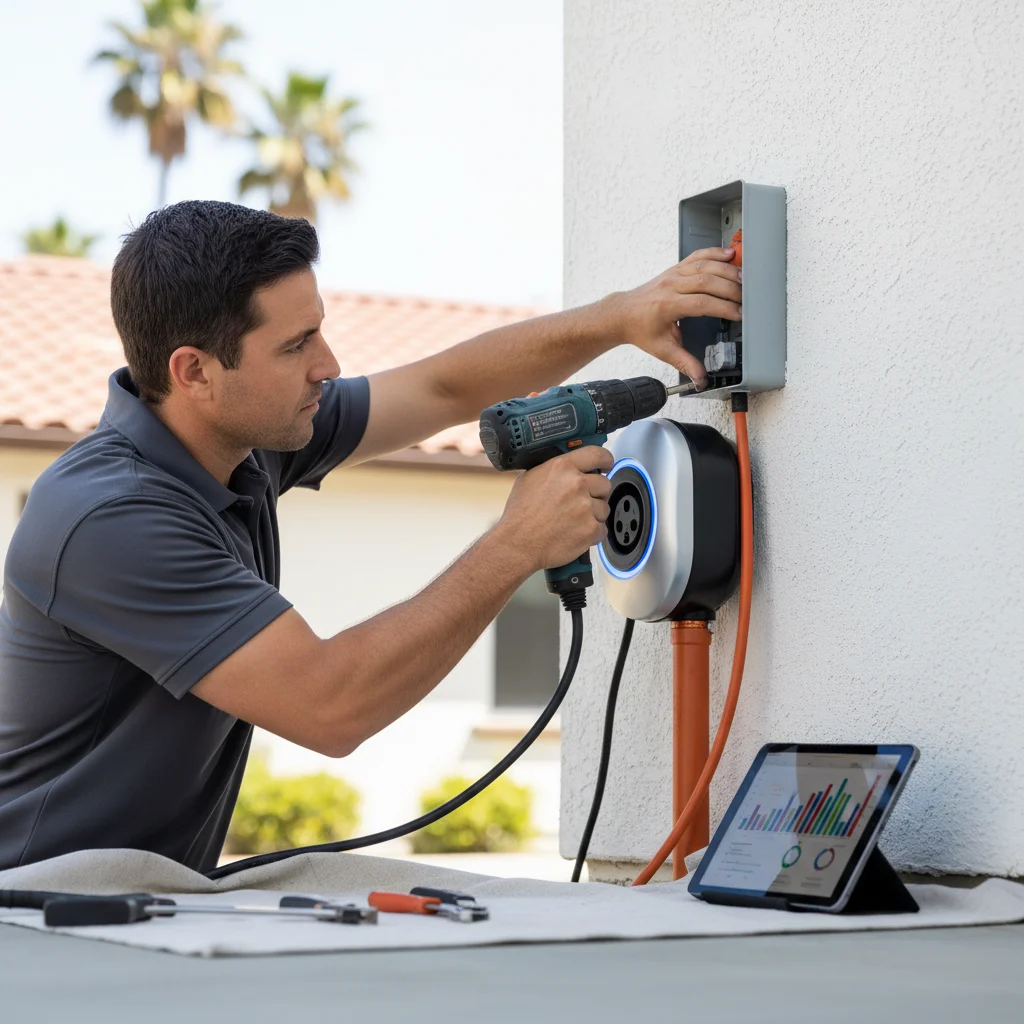
Tesla is common on inland roads. A county Tesla share still isn’t a figure we can publish. Superchargers are Tesla’s DC fast-charge network. Non-Tesla EVs generally need CCS or J1772. Independent operators in this network bring a 240-volt Level 2 source to the car. They use a native NACS plug, or a CCS or J1772 adapter for other brands.
Two failures get dumped into one panic. A traction pack that hit empty won’t add miles until it takes energy. A dead 12-volt can leave the car looking like a brick. The main pack may still hold range. Operators jump or replace a dead 12V on site. They handle Tesla and every major EV brand.
If the pack is the problem, a mobile Level 2 visit typically adds 10 to 20 miles of range in 15 to 30 minutes of charging. That clock is charging time on site. It isn’t a promise about when someone arrives. The operator quotes you before starting and bills you directly. Charge Pro IE matches you with that operator. It doesn’t own trucks, employ technicians, or perform the work. What a mobile EV charging visit actually is, and isn’t is the plain walkthrough.
If you’re still rolling, slow down. Cut extra HVAC if you can stand it. Aim at a stall your nav can confirm as live. PlugShare, A Better Routeplanner, and the car’s own guidance are the usual checks. This page can’t quote a success rate for those apps. If a public session errors out, sitting on empty hoping it clears is a weak plan. Call for out-of-charge recovery.
If you’re already stopped on a freeway, pull as far right as you can. Hazards on. Stay in the vehicle if that’s the safe call. Then phone. Charge Pro IE is the referral line for the Inland Empire. Call (909) 250-2881 and we’ll connect you with an independent local operator. We serve cities across both counties, from Fontana warehouse rows to Temecula, and from Ontario lots to the High Desert after Cajon.
Frequently asked questions
Is there a verified EV count for Riverside or San Bernardino County?
Not in the sources this page can cite. Use the California Energy Commission ZEV tools and the DMV vehicle population reports for registrations.
Why does inland driving feel tighter than the sticker range?
Pass climbs and summer HVAC use more energy than an EPA loop. High Desert cities cover tens of square miles of land, so local errands run long. This page won’t invent a percent of range lost. Your trip energy screen is the number that matches your car and your route.
What should I do if the pack hits empty on I-15, I-10, or I-215?
Get to the right shoulder if you can. Hazards on. Stay in the car if it’s safe. Then call for a mobile Level 2 visit. An operator typically adds 10 to 20 miles in 15 to 30 minutes of charging on site. Charge Pro IE connects you. It doesn’t roll the truck itself.