USAA roadside assistance for an EV battery is a coverage question on your policy. It’s not a charging truck on I-10, I-215, or the Cajon climb. Members in Riverside County and San Bernardino County still need that split in writing. One path is whatever your USAA add-on actually sends. The other is an independent operator who brings power to the car.
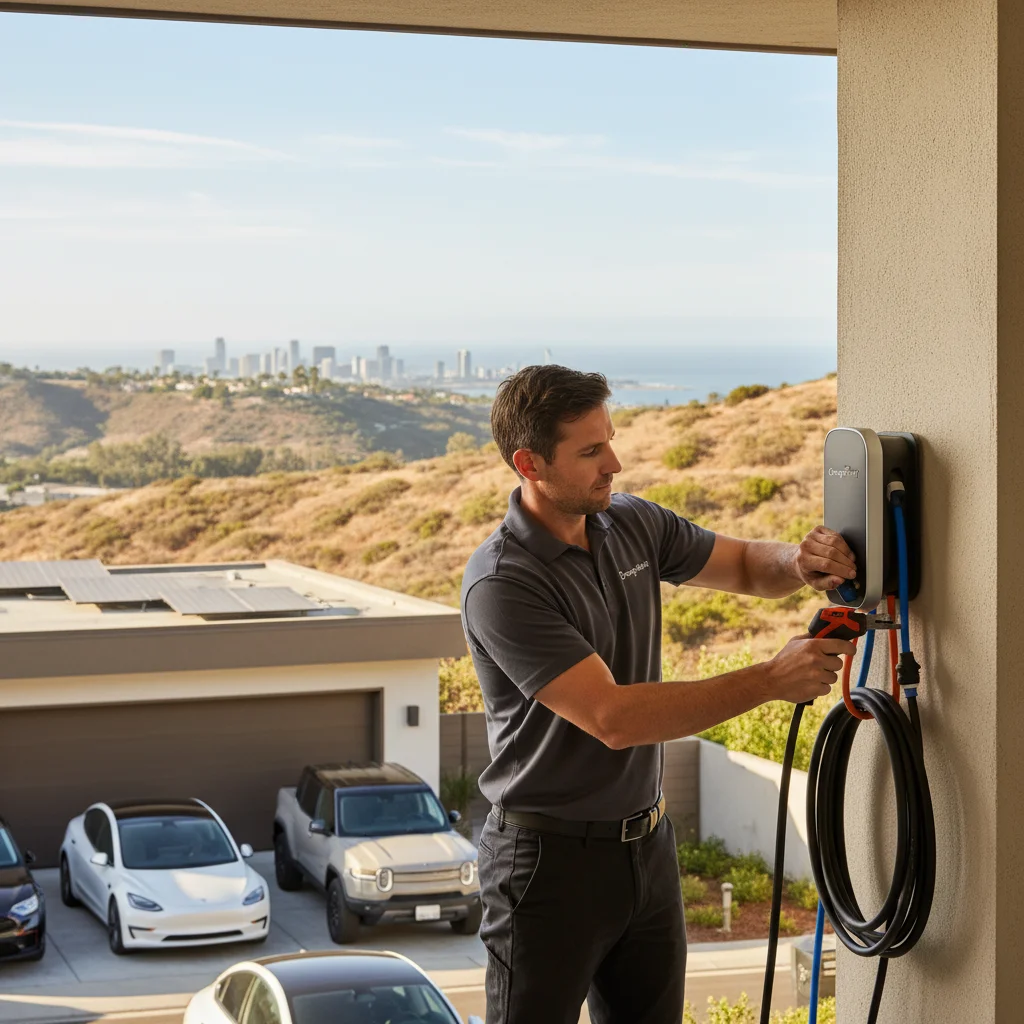
Your EV can fail in two ways that look the same
A dark dash doesn’t tell you which battery died. The 12-volt battery runs computers, locks, and the contactors that wake the pack. If that small battery is dead, start and locks can fail. The traction pack can still hold range. If the high-voltage pack is empty, you still can’t roll. A healthy 12-volt doesn’t fix an empty pack.
Insurance roadside plans are built around jumps and tows. A jump is a 12-volt job. An empty pack is a charging job. Mixing those up burns time on the shoulder.
See when an EV 12V battery dies on the road. After the car stops, start with charge it, jump the 12V, or tow it.
What to confirm on your USAA paperwork
If roadside is on your USAA auto policy, the endorsement text is the authority. It’s not a charging vendor. Open the app or the PDF and read the listed services. Look for jump starts, lockouts, tire changes, and towing. Look for any line that sends a charger to the car.
No verifiable USAA on-site charging rule turned up from USAA’s public materials. USAA sets the benefit. Don’t assume a bumper-side charge. Ask a USAA representative what an empty EV triggers. Ask whether it’s a jump, a tow to a charger, or another benefit. That’s a policy question. Only USAA can answer it for your contract.
Tow mileage is also a policy field. It’s not a published Inland Empire figure. Don’t guess a free-mile cap. Ask how far they will haul an EV that needs a plug. Ask whether that limit matches a tow to a shop. If the first jump fails, ask what they dispatch next.
Our guide Can roadside help jump-start an EV, or only the 12V explains that line.
Inland Empire roads, not a generic map
This market is two counties, not one city. Riverside city’s power is Riverside Public Utilities, which has served the city since 1895. Colton owns the electrical infrastructure inside its boundaries. Moreno Valley is split between Southern California Edison and Moreno Valley Utility. Moreno Valley Utility covers newer development and publishes an address lookup. Rancho Cucamonga is split. SCE serves most of the city. Rancho Cucamonga Municipal Utility covers a southeast pocket that includes the Victoria Gardens area. Banning runs a city electric utility. Big Bear Lake and Big Bear City sit on Bear Valley Electric Service.
Home power doesn’t rescue a car already sitting on the shoulder. Your utility still shapes how you charge in the driveway. It doesn’t rewrite USAA’s endorsement.
Daily corridors here include I-10 through Colton and Redlands. I-215 runs through Moreno Valley and Perris. SR-60 cuts through Jurupa Valley. The I-15 Cajon climb toward Victorville is a long grade. SR-91 through Corona is heavy traffic more than open country. Fontana warehouse rows and Ontario airport lots strand work EVs after a shift. March ARB sits on the same county map as those freeways.
A USAA tow, if your policy covers one, moves the car. It doesn’t fill the pack in the lane. For Cajon, see out of charge on I-15 at the Cajon climb toward Victorville.
A mobile charge is a different vendor
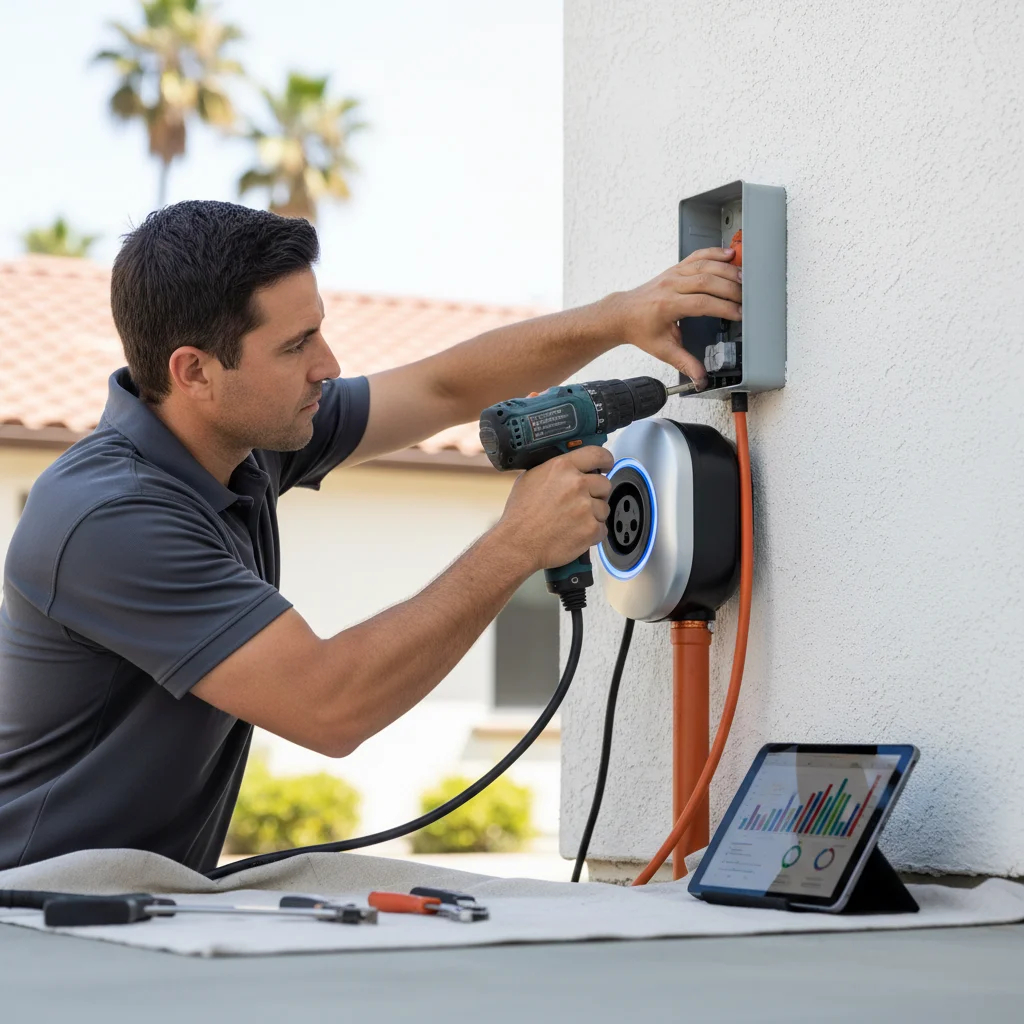
The operators Charge Pro IE connects you with don’t replace USAA. An independent local operator can bring a 240-volt Level 2 source to the car. Tesla owners get a native NACS plug. Other EVs use a CCS or J1772 adapter. A typical stop adds 10 to 20 miles of range. That takes 15 to 30 minutes of charging. That interval is time on the cable. It’s not a promise of when someone arrives.
Those operators can also jump or replace a dead 12-volt on site. They handle Tesla and every major EV brand. They quote you before they start and bill you directly. Charge Pro IE doesn’t set that price. It doesn’t own the truck. It doesn’t hold a trade license.
If the pack is empty, you may want to leave under your own power. That’s the mobile EV charging path. Other insurers show the same split. Read what Allstate roadside help actually covers on an EV. Then compare AAA or mobile EV charging when the pack hits empty.
Keep the USAA add-on for what it does well
Flats and lockouts still belong with your insurer when the endorsement is in force. A car that needs a shop is the same call. An empty pack is a separate call. A 12-volt that needs a tech at the bumper is a separate call too. Save both numbers in your phone. Use USAA for the mechanical list you bought. Call for a mobile charge when the car is fine except for power.
If you’re out of charge in the Inland Empire, call Charge Pro IE. The number is (909) 250-2881. We’ll match you with an independent operator. The operator quotes before work starts.
Frequently asked questions
Does USAA send a truck that charges my EV on the shoulder?
No verifiable USAA on-site charging rule turned up from USAA’s public materials. USAA sets that benefit. Read your roadside endorsement first. If the packet only lists a jump and a tow, they’re moving you. They’re not charging you in place. Confirm the current rule with USAA before you need it.
Will USAA jump a dead 12-volt on an EV?
Jump starts are a common roadside line item. Confirm yours on the declarations page. A 12-volt jump is not a pack charge. If the jump fails, ask whether the next covered step is a tow.
Can I keep USAA and still call a mobile charging operator?
Yes, they’re different vendors for different jobs. You pick one path for a given stall. There’s no conflict in keeping USAA for flats and lockouts. Call an operator when the pack is empty.