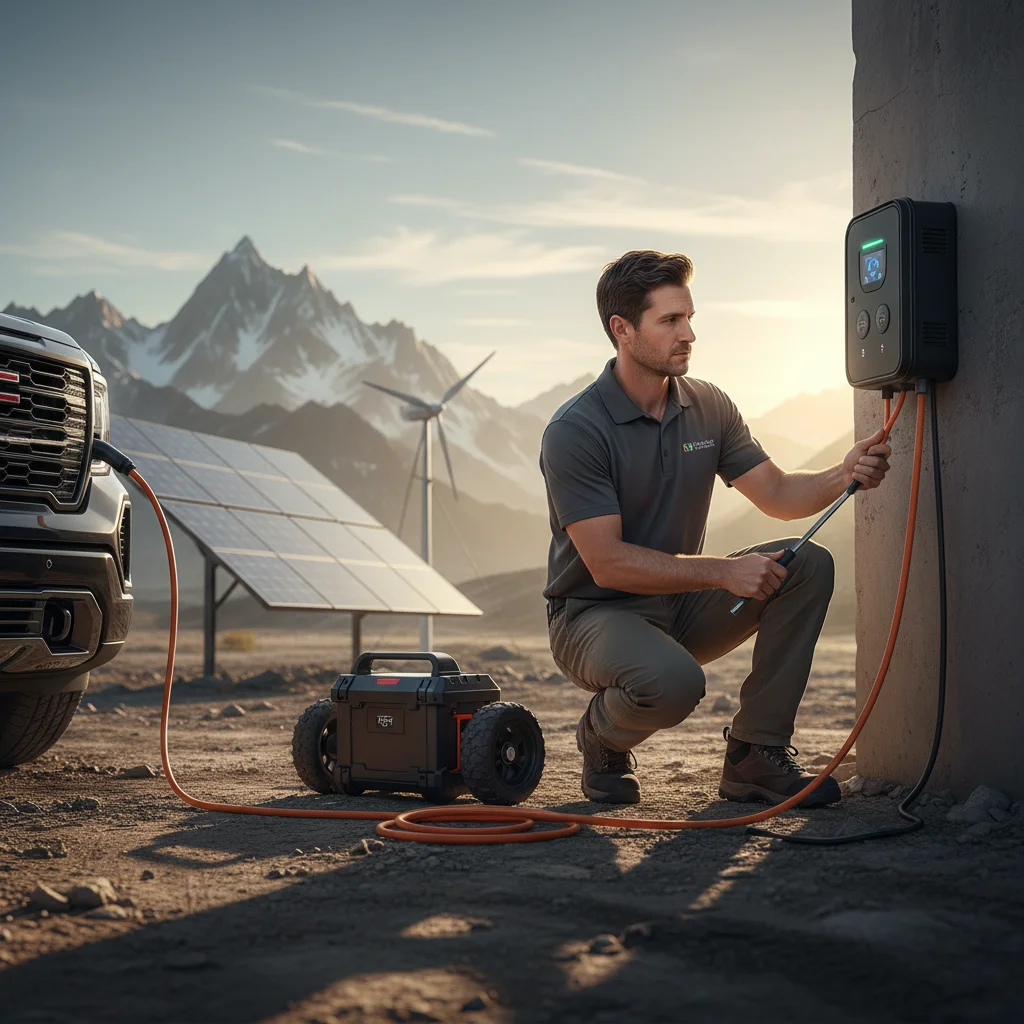
A Fontana delivery van that went flat still needs help on the lot. EV roadside assistance here means a mobile Level 2 top-up, not a tow. Charge Pro IE matches stranded drivers with independent local operators. Those operators bring a 240-volt Level 2 source to the van. They typically add 10 to 20 miles of range. Charging time is usually 15 to 30 minutes. That figure is charging time, never an arrival time. The operator quotes before starting and bills you directly.
Warehouse miles that empty a Fontana work pack
Fontana is the second-largest city in this market after Riverside. Census ACS 2019-2023 counts 214,169 people here. Fontana’s warehouse belt along I-10 and Valley Boulevard is among the country’s densest. Electric cargo vans work those rows all day. They sit in air conditioning while summers pass a hundred degrees. There’s no coastal relief in this part of San Bernardino County. Inconsistent speeds on I-10 and I-15 drain a pack fast. A loaded cargo bay and HVAC make that drain worse than predicted.
North Fontana grew after the Kaiser steel era. Southridge, Hunters Ridge, Sierra Lakes, and the Village of Heritage all feed that belt. Downtown Fontana and the Sierra Avenue corridor see the same last-mile stops. Bloomington sits on the southern edge and feeds the same warehouse traffic. The former Auto Club Speedway site sits in unincorporated San Bernardino County near Fontana. It’s now being redeveloped as a logistics center. That project only adds more van movement on Cherry Avenue.
Dark dash or empty range
A dead delivery van is usually one of two problems.
A dark dash and a silent fob point to the 12-volt battery. That small battery runs computers, radios, and telematics. It often runs a lift gate too. The traction pack can still hold plenty of energy. An operator can jump or replace that 12-volt on site. Tesla and every major EV brand use some form of this low-voltage system.
A van that wakes with zero miles and won’t roll has an empty pack. Stop-and-go warehouse work does that on long shifts. Fontana is where I-15 turns from a city freeway into the pass approach. Everything above the SR-210 junction is committed to the grade. The I-10 and I-15 interchange itself is a frequent shoulder-call spot. HVAC on a loaded van through that heat is usually the last straw.
Neither failure needs a shop visit just to finish the route. See what a mobile EV charging visit actually is for the difference.
Why a loaded Fontana van is a poor tow
Hooking a cargo van with packages still inside is slower than hooking a passenger car. You still need a plug after the drop.
A mobile Level 2 visit leaves the cargo where it is. The operator comes to a legal parking spot. That can be a warehouse row off Valley Boulevard. It can be a shoulder once you’re off I-10. Operators bring a native NACS plug, plus CCS or J1772 adapters. The driver stays with the van the whole time.
Compare that path with towing a dead EV versus a mobile charge. The calendar math is sharper for a loaded work van. Neighboring warehouse cities run the same stall pattern. Ontario airport lots and warehouse rows see it on shift change. So do Rialto and Bloomington lots when a route ends empty.
How to call without guessing the next plug
Move the van somewhere legal if it will still roll a few feet. Give the nearest cross street as a landmark. Sierra, Cherry, Citrus, Baseline, and Valley all work. Say whether the dash is dark or the pack is at zero. Name the make when you call.
Charge Pro IE is a referral line. It holds no license, owns no trucks, and employs no technicians. It matches you with an independent local operator. The operator confirms timing with you and quotes before work starts. They bill you or the fleet directly. The pros we connect you with are licensed and insured. Full steps are on mobile EV charging and EV roadside assistance. For lot-level steps, read a dead EV by a Fontana warehouse. City charging context is on the Fontana EV charging page.
If the operator finds a deeper fault, they should say so. A top-up won’t clear a high-voltage error. Point that van at the fleet’s own shop line.
Finish the loop, then charge on purpose
Most Fontana calls add 10 to 20 miles. That’s usually enough to reach a depot charger. Confirm the live stall in your charging app. Don’t treat a memory of a plug as current. Southern California Edison serves Fontana. Confirm the current depot rate with the yard before you pay. No city-published commercial charging map for these warehouse rows could be confirmed here. The yard’s own list is the authority.
If you’re north of the SR-210 junction with a thin pack, stop in town. A rescue on Sierra or Cherry beats a stall on the Cajon climb. Rancho Cucamonga sits north, Ontario sits west, and Rialto sits east.
When the van won’t wake, or the pack is gone mid-route, call (909) 250-2881. Charge Pro IE will match you with a local operator.
Do operators work on commercial vans, or only passenger EVs?
They work on both cargo vans and passenger cars. The same Level 2 kit and 12-volt jump cover both.
Can they charge a van that is still loaded?
Yes, there’s no need to unload for a jump or a range top-off.
How much range does a typical Fontana visit add?
Most visits add 10 to 20 miles. Charging time is typically 15 to 30 minutes. That isn’t a promise of when someone arrives.