A failed home Level 2 session can still leave your Chevy Bolt stuck inland. The wall unit went quiet on you overnight. Your car still won’t take a charge at a public stall. You’re past a simple driveway glitch now. You’re in a Bolt that refuses power on Inland Empire heat, grades, and shift-change lots.
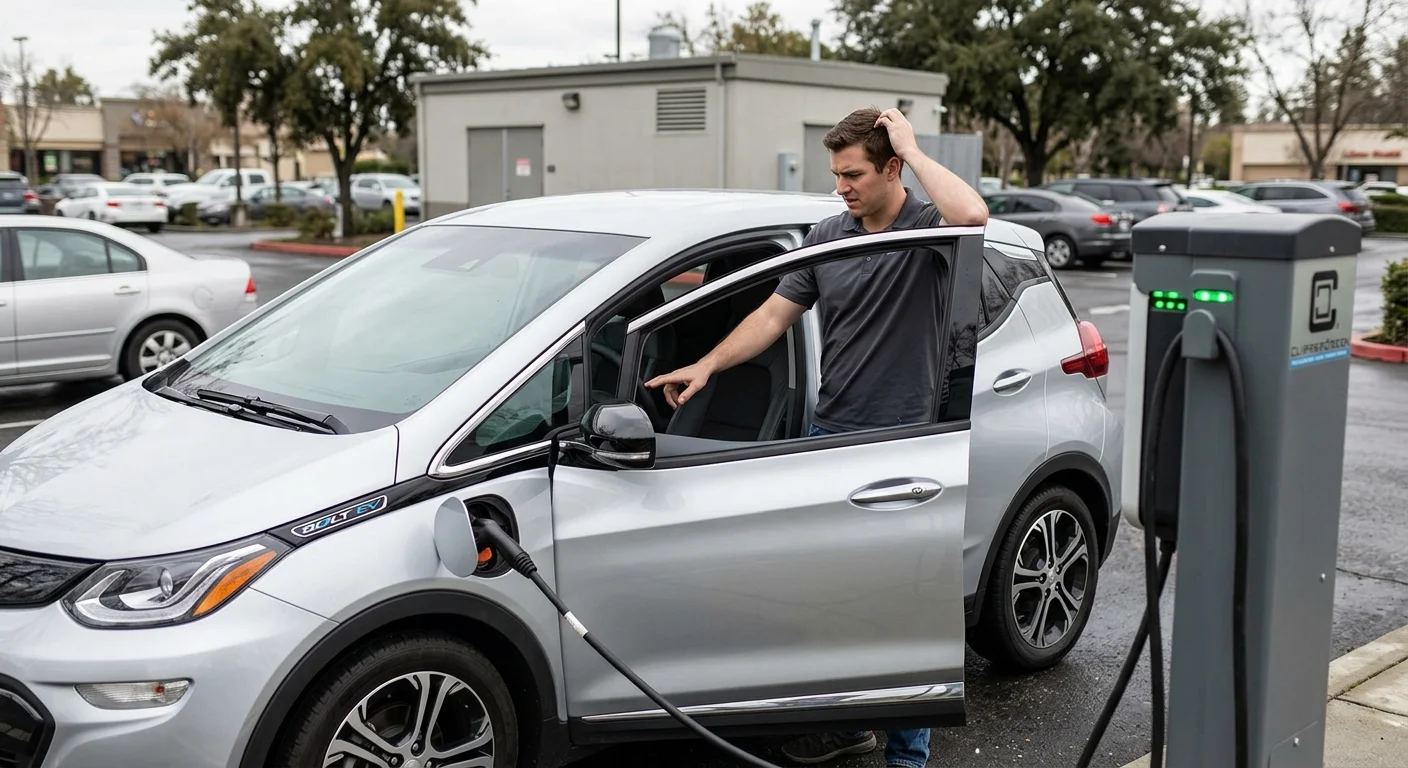
Your Chevy Bolt won’t charge, and you need the next honest move. Start with the wall, the stall, and the 12V. Then decide whether a tow even helps. The operators we connect you with can add a mobile Level 2 charge on site. That’s charging time, never a promise of when someone arrives.
Why a dead home session still puts you on inland roads
A Bolt that never filled overnight often leaves the driveway with thin range. Inland miles aren’t a flat coastal hop. The Cajon climb on I-15 toward Victorville eats energy in a hurry. I-10 through Colton and Redlands does the same in summer heat. I-215 through Moreno Valley and Perris Valley is a long, hot run. SR-60 through Jurupa Valley stacks grades with freight traffic. The 91 through Corona does too.
A missed fill at home turns those corridors into a stranding risk. If you can still roll, pick a stall you can actually reach. Then treat the failed session as a car-and-power problem.
Warehouse and airport shifts add their own pattern. Fontana and Ontario lots fill with cars that sat plugged in and woke empty. Ontario airport rows see the same morning surprise. A Chevy Equinox EV that won’t charge fails the GM handshake the same way. The refusal looks the same on the dash.
Older housing makes that home miss more likely in some cities than others. ACS 2019-2023 figures put pre-1980 housing at 60.9% in San Bernardino. Redlands sits at 60.4%. Riverside sits at 56.4%. Montclair is 68.5%. Norco is 68.8%. Fontana is only 28.9%. Eastvale is 2.2%. Temecula is 6.5%. An older panel in San Bernardino is a different first suspect than a new Eastvale build. If the breaker tripped, that’s a home-power story. Your Bolt can still strand you once you leave the driveway. The city-by-city panel pattern is in older Inland Empire panels and EV chargers.
Heat on the valley floor is another quiet drain. A pack that looked fine at 10 p.m. can look thin by afternoon. Grades toward Yucaipa and Highland add more. It’s why a failed overnight Level 2 isn’t a small miss here.
First, name whose power failed last night
The Inland Empire isn’t one utility when a wall unit goes dark. Southern California Edison serves most west valley cities, including Chino, Ontario, Fontana, and Upland. San Bernardino, Rialto, Redlands, Highland, and Yucaipa are on SCE too. So are Corona, Eastvale, Jurupa Valley, Perris, Menifee, Temecula, and Murrieta. Hesperia, Adelanto, and Phelan sit on SCE as well.
Riverside isn’t on SCE’s served-cities list. Riverside Public Utilities has served the city since 1895. Colton owns the electrical infrastructure inside its boundaries through the City of Colton Electric Utility. Banning runs City of Banning Electric Utility. Big Bear Lake and Big Bear City sit on Bear Valley Electric Service.
Two cities in this market split their electric service. Rancho Cucamonga is mostly SCE, plus Rancho Cucamonga Municipal Utility in a southeast pocket. That pocket covers The Enclave, Day Creek Square, The Resort, and the Victoria Gardens area. Moreno Valley is SCE plus Moreno Valley Utility. MVU covers newer development since 2004 and publishes an address lookup. San Jacinto gets delivery from SCE, with San Jacinto Power supplying generation. Apple Valley gets delivery from SCE, with Apple Valley Choice Energy procuring.
Victorville homes sit on SCE, not the city’s municipal utility. Victorville Municipal Utility Services covers the Southern California Logistics Airport and Foxborough Industrial Park only. It doesn’t serve residential areas.
If last night’s Level 2 died, check the right outage map first. An SCE TOU-D-PRIME customer isn’t on Riverside’s EV rate. RPU publishes its own Electric Vehicle Rate for city customers. Confirm the current rate with your utility before you blame the car. This page won’t quote dollar figures, because they change.
Lake Arrowhead and Crestline show up on SCE’s tariff index. A cabin charger that died overnight in Crestline is still an SCE-side power question. A dead wall unit in Big Bear Lake is a Bear Valley question. The car’s next refusal at a valley stall is a separate check.
A Bolt that sat plugged in all night and still woke empty has usual causes. Those causes are a breaker, a dark utility, or a failed handshake.
What “Unable to Charge” is actually saying
Chevy’s “Unable to Charge” line is a blanket stop. The car and the equipment handshake on power and safety. If that talk fails, the Bolt refuses the session.
The stall can be the weak side. The port latch can be the weak side. The car’s onboard charger can be the weak side. Unstable supply can trip the same message. The Bolt will protect the pack if the feed looks unsafe.
You won’t get a shop diagnosis from that one line. Work the outside first, then reset. Then treat the 12V as a hidden lock.
Don’t invent a code from memory. If the Driver Information Center shows a number, write it down. Share that with a Chevy dealer or the operator who quotes you on site. This page can’t confirm what each code maps to. Chevrolet’s manuals set that mapping. Those bulletins weren’t in the research behind this piece.
Check the stall, the cable, and the port before you blame the Bolt
At a public stall, try the next dispenser if it looks live. Then try another site if you can still roll. A connected cable that never starts is a known mess. If the screen says linked and the kWh never moves, treat the stall as failed.
At home, reseat the connector in the port until it clicks. Reseat the wall end too. A loose J1772 latch will kill a Level 2 session with no drama. Look at the cable for heat marks, a crushed jacket, or a bent pin. Swap to a known-good cable if you have one.
Open the breaker panel and look for a tripped EV circuit. That’s a common Inland Empire home miss on older stock. San Bernardino, Redlands, Riverside, Upland, and Montclair show a lot of pre-1980 housing. Reset only if the panel is dry and you can reach it safely. If it trips again, stop. That’s an electrician problem, not a roadside one.
Level 1, Level 2, and DC fast charge are different talks. A failed DC stall doesn’t prove Level 2 is dead. A failed home Level 2 doesn’t prove every public stall will refuse you. Test one other method if you still have enough range to move. A wall outlet crawl won’t save a stranded Bolt on I-10. It won’t save you on the Cajon either.
Water in the port is another quiet stop. Dry it before you plug. Don’t pry ice or grit with a metal tool.
A soft reset is the cheap next step, not a repair
Software glitches stall the handshake. A restart often clears them. It’s a safe pause you can do in a driveway or a lot.
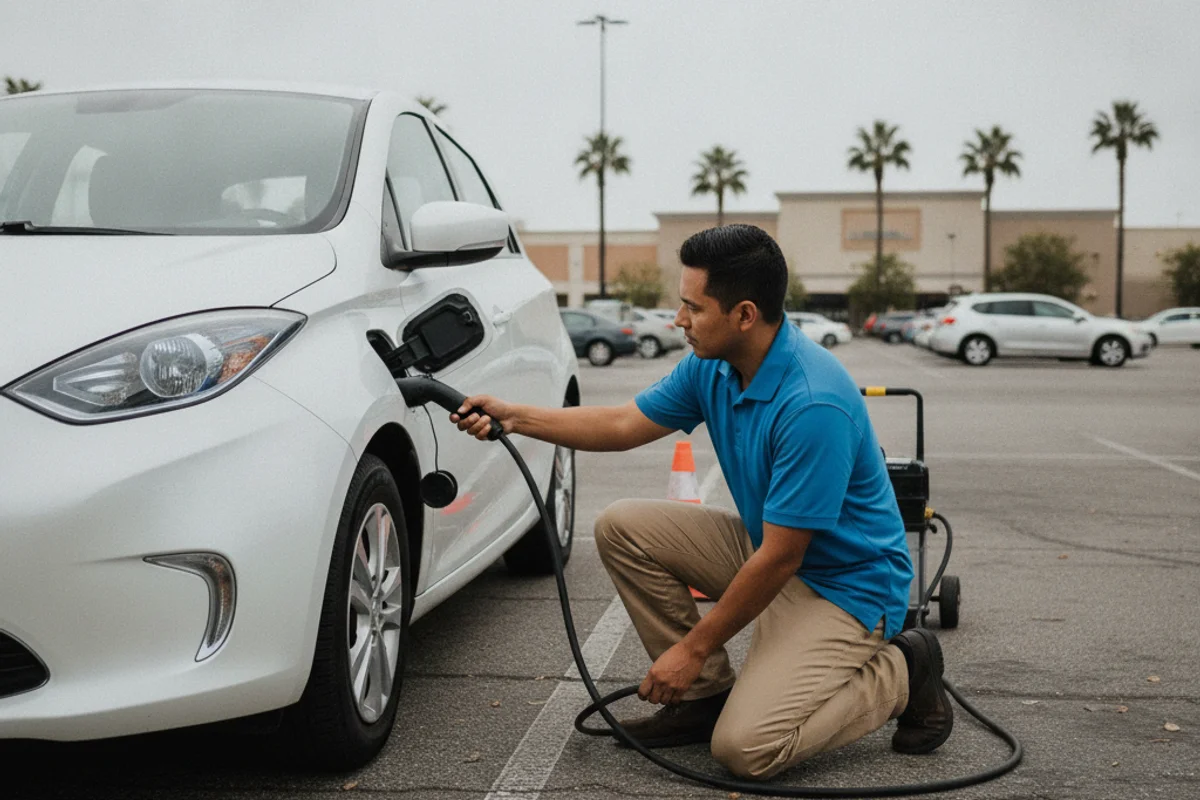
Unplug the cable and wait until the session is fully ended. Power the Bolt off. Open the driver’s door, then close it. Wait a few minutes so modules can go quiet. Power the car back on. Plug in again and watch for a real start, not just a click.
If nothing changes, you didn’t waste the try. Next is the 12V, then outside help.
Don’t hold jumper clamps on while you guess. Don’t open high-voltage orange gear. The pack isn’t a DIY jump point.
The 12V can block charging even when the pack still has miles
The drive battery moves the car. The 12V runs the computers that let charging start. Relays, screens, locks, and charge-port logic sit on that small battery. If it’s weak, the Bolt can look bricked. “Unable to Charge” can show while the pack still holds range.
Clues stack when the 12V is weak. The dash stays dark and accessories blink out. Locks act odd and the port never wakes. Those clues overlap a dead pack, so don’t guess from one symptom.
Find the 12V in the owner’s manual for your year. Locations vary by model year. This page won’t invent an under-hood map. Look for corrosion on the terminals if you can see them safely. Chevrolet doesn’t publish a roadside voltage number in the research behind this site. We won’t quote one.
A 12V jump or replacement is work for someone who knows EV low-voltage systems. The operators we connect you with can jump that 12V on site. They can replace it on site too. They also bring a 240V Level 2 source for the pack. A Bolt uses a CCS or J1772 adapter on that visit. Typical add is 10 to 20 miles of range in 15 to 30 minutes of charging. That clock is charge time only.
If the 12V dies again after a jump, treat it as a failing battery. More on that pattern is in when the 12-volt dies on the road.
After the wall unit fails, pick a reachable stall or a mobile Level 2
You already missed a home fill. Your next choice is a public stall you can still reach. The other choice is a mobile charge where you sit.
If you can still roll, a working public Level 2 or DC stall may finish the job. If the Bolt refuses every stall, towing to another dispenser may refuse you again. That’s when on-site help matters.
Mobile EV charging is a truck that brings 240V to the curb. For a Bolt, that visit is non-Tesla EV rescue with CCS or J1772. The operator quotes you before starting. The operator bills you directly. Charge Pro IE doesn’t set the price or own the truck. It doesn’t hold a trade license.
Downtown Riverside under RPU follows the same safety rule. So does a Fontana warehouse row or an Ontario airport lot. So does a Temecula evening or a shoulder on I-10 in Colton. Stay out of live lanes. Then call for the kind of help that matches the failure.
The Ortega near Wildomar is a grade problem if range is already thin. So is the drop from Lake Arrowhead toward Highland. A cabin Level 2 that died overnight still leaves you with a downhill drive.
A tow moves the car. It doesn’t make the Bolt accept a charge
A hook is right after a crash or a seized drivetrain. It’s also right if you can’t wake the car after the 12V is handled. A hook is a weak first call for a refused charge. You can spend the tow and still meet a stall that won’t handshake.
On-site work can jump the 12V or reseat a port. It can also add enough Level 2 range to reach a stall that works. Compare that choice in towing a dead EV versus a mobile charge.
Tell the operator what you already tried. Name the home utility if you know it. Say whether the dash is dark. Say whether “Unable to Charge” is the only line. That briefing is how they bring the right adapter for a Bolt, not a Tesla plug.
When the checks are done, call for a local operator
If the breaker is on and the cable is seated, you’ve done the easy checks. If the reset is done and the Bolt still refuses, stop repeating the same plug. You need a person at the bumper.
Charge Pro IE is a referral line for the Inland Empire. It matches you with independent mobile rescue operators. It doesn’t perform the work, and it doesn’t employ technicians. Call (909) 250-2881 and we’ll connect you with a local operator who quotes before starting.