If your EV dies on the Ortega near Wildomar, stay put. Call for a mobile Level 2 visit on that shoulder. You’re on a mountain road with little room to wait. A public stall in the next town doesn’t help until you can roll. The operators we connect you with bring 240-volt power to the car.
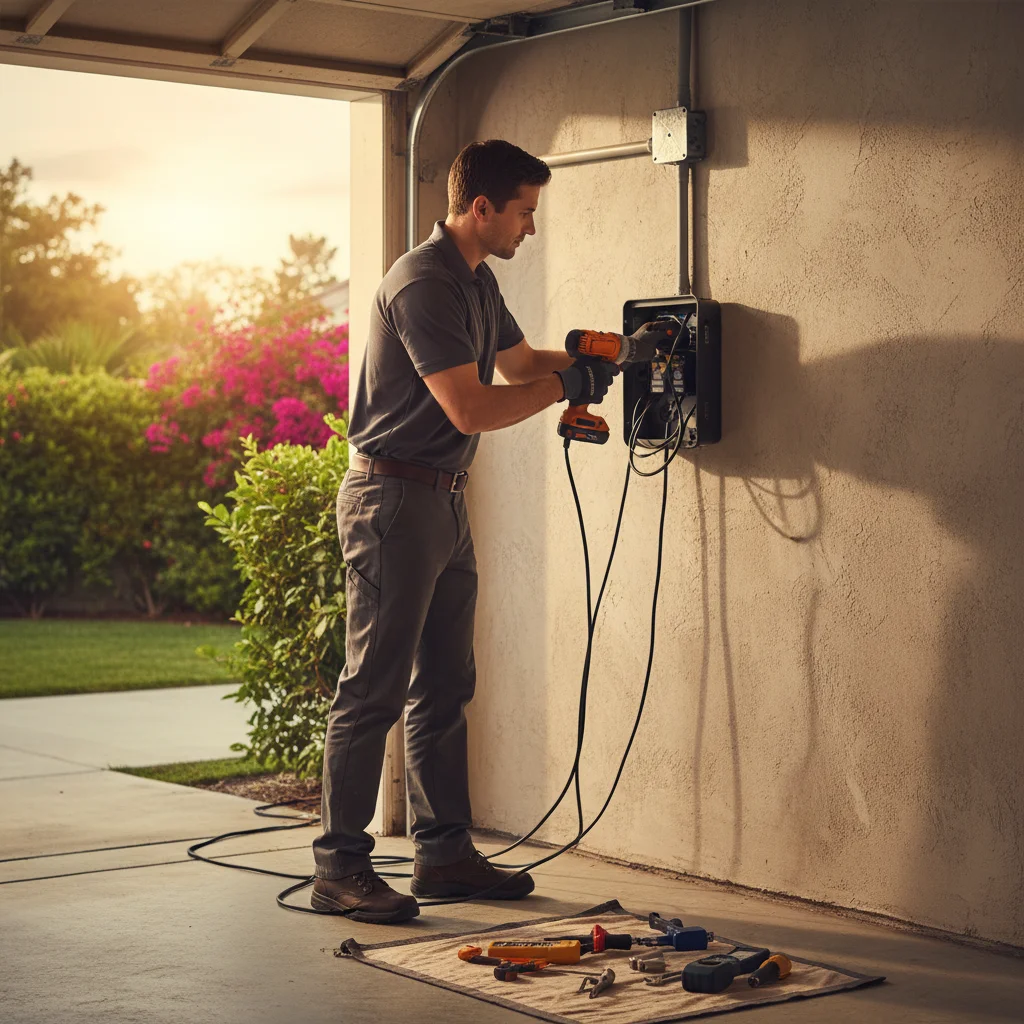
Why this stall happens in Wildomar
Wildomar is a Riverside County bedroom city on I-15. It sits between Lake Elsinore and Murrieta. Census ACS 2019-2023 counts 37,277 residents, and the 2024 estimate is 37,736. The city incorporated in 2008, the same year as Menifee.
It’s a freeway-adjacent bedroom city, and a lot of drivers just pass through. They meant to stop in Murrieta, or they meant to finish in Elsinore. The pack hits empty in the stretch between those plans.
West of town, the Santa Ana Mountains rise quickly toward the Santa Rosa Plateau. The Ortega is the mountain highway that feeds this side of the basin. Town streets here have driveways and side roads, and the Ortega often doesn’t. If the car dies there, you’re occupying a thin shoulder instead of a parking stall.
Inland heat and climbing both use more energy than a flat cruise. Clinton Keith Road and Bundy Canyon Road both climb through Wildomar. Drivers use both as cut-throughs when I-15 is slow. A range number that looked fine on the plateau can fade fast. The next grade is often what finishes it. That’s a Wildomar problem, not a generic empty-battery story.
People live in The Farm, Sedco Hills, Windsong Valley, and along Palomar Street. Southwest Healthcare’s Inland Valley Medical Center sits in town. Long shifts in that lot are a quiet way to drain a pack. The drive toward Clinton Keith or the 15 is where it shows.
The Ortega, then the town roads
A mountain highway with little room
The Ortega isn’t Grand Avenue, and it isn’t Palomar Street. Those roads let you duck into a driveway or a side street. On many Ortega stretches you get a lane and a sliver of pavement. Beyond that sliver, you’re looking at open slope. If power starts to drop, put the hazards on right away. Coast to the widest legal scrap of pavement you can reach. A dirt turnout you fully occupy beats a half-in-the-lane stop.
Stay with the car unless you’re in danger. Don’t walk out for help on that corridor. Don’t count on a sidewalk along that road. Keep your seatbelt on and let traffic see the flashers.
Clinton Keith and Bundy Canyon
These aren’t the Ortega, and they still catch people. Both roads climb, and both carry cut-through traffic avoiding the 15. If you left Menifee or Canyon Lake thin, the grade can finish the pack. The same miss happens heading west toward the plateau.
Get out of the travel lane while you still have motion. A legal shoulder or a wide apron is enough room. Then stop treating it as a creep-to-the-next-plaza job. Creeping on the last predicted miles is how cars die in the lane.
I-15 between Elsinore and Murrieta
Wildomar’s other trap is the freeway itself through town. Drivers pass through here more than they stop. The ones who strand on this stretch meant to make Murrieta or Elsinore. Neighbors on both sides have more retail than Wildomar does. If you planned Murrieta and ran out early, this is where it breaks. The I-15 shoulder in Wildomar is a bad place to wait and hope. Put the hazards on and get as far right as you can. Stay in the car with the belt on.
Don’t try a friend’s extension cord on a freeway shoulder. You want a mobile visit or a proper tow, and they’re different jobs.
Inland Valley Medical Center and local streets
Hospital parking is a quieter pattern with the same ending. You sit for hours while cabin loads keep running. The car looks fine until Baxter Road or Clinton Keith starts to climb. If it won’t ready, sort an empty pack from a dead 12-volt first. They feel identical from the seat, and they aren’t the same job.
Sedco Hills and the Palomar Street corridor are slower streets, which helps. You still shouldn’t leave a dark EV in a moving lane. Get it out of traffic first, then make the call.
Empty pack versus a 12-volt that quit
A lot of dead-EV calls are really the small battery. The traction pack can still hold energy when the 12-volt fails. The 12-volt runs the computers and the wake-up path. When it fails, screens stay dark and doors can act strange. The car won’t roll until that small battery is alive again.
If the dash still talks about range, that’s more likely an empty pack. If nothing wakes at all, think 12-volt first. Operators in this network jump or replace a dead 12-volt on site. They do that when that’s the job in front of them. They handle Tesla and every major EV brand.
Don’t keep jumping a 12-volt that dies again later. That usually means the battery is finished, or a drain is still there. A roadside jump can get you to a shop, not a replacement battery.
A jump does nothing for an empty pack. You need energy into the high-voltage system instead. That’s when you want a mobile EV charging visit.
What a mobile Level 2 visit actually is
Charge Pro IE is a referral line for stranded EV drivers. We don’t own the truck, and we don’t employ the technician. We match stranded drivers with independent local operators. The operator quotes you before work starts, then bills you directly.
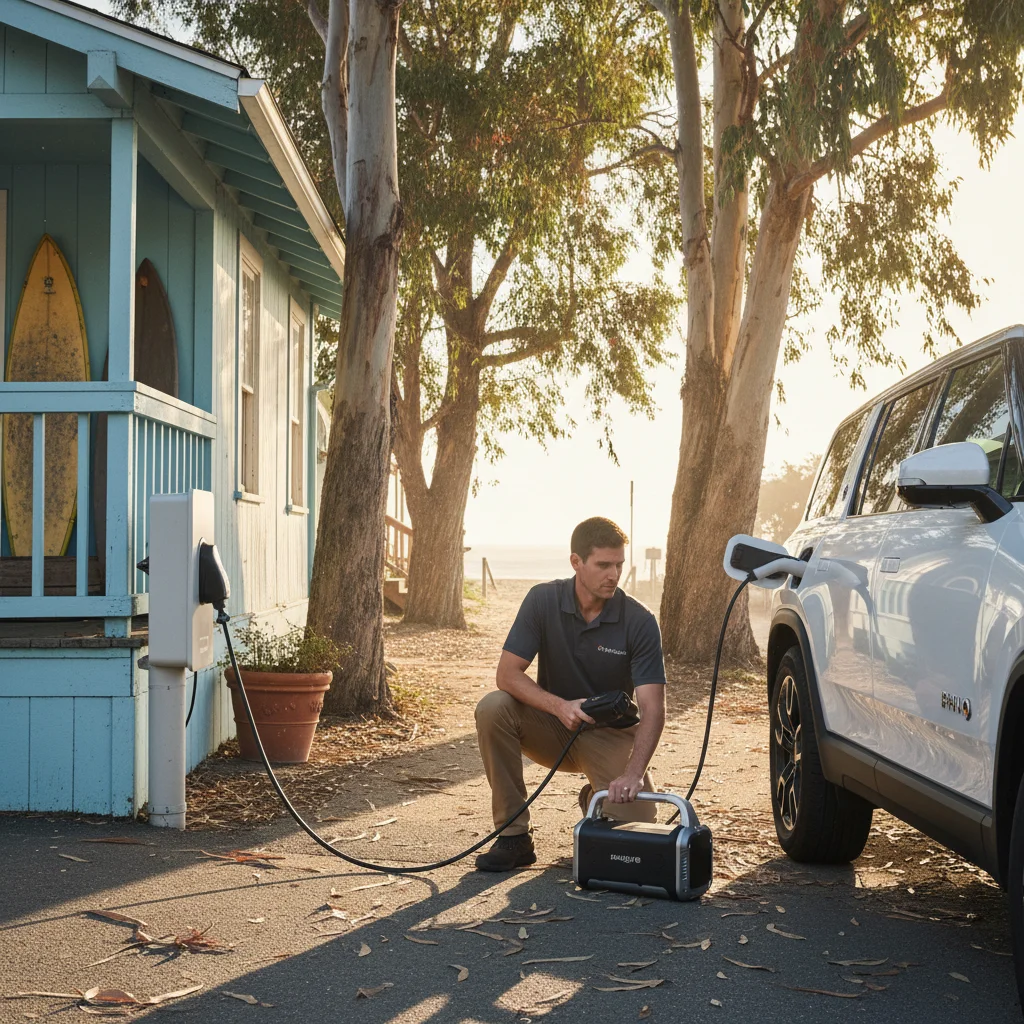
They bring a 240-volt Level 2 source to the car. Teslas use a native NACS plug on that visit. Other EVs use a CCS or J1772 adapter. Typical charging time is 15 to 30 minutes. That window is charging time, never an arrival time. In that window the car typically gains 10 to 20 miles of range.
On the Ortega, those 10 to 20 miles get you off the shoulder. That’s the difference between sitting and rolling into town. It’s enough to reach a plug you choose yourself. We’re not going to name a stall from here. Check your car’s map or a charging app once you can move. Confirm it’s working before you spend the last miles.
If you want the mechanics, read what a mobile EV charging visit actually is. This visit is the core of EV roadside assistance in Wildomar. It isn’t a shop appointment or a home-charger install. It’s get-you-rolling help on the pavement you’re already on.
Tow from the Ortega, or charge in place
A tow can still be the right call on this road. If you’re in a live lane, you may need a flatbed first. If the car won’t sit far enough right, safety wins. Many EVs need a flatbed so the drive units aren’t dragged. Ask how they’ll load your model before they hook it. If they can’t answer, wait for someone who can.
A tow still doesn’t put energy in the pack. You get moved, then you still need a plug. You still need a way home from the drop-off too. On a mountain highway that sequence runs long. A mobile charge skips that first relocation when you’re already in a workable stop.
We don’t publish a price, because the operator sets it. Tesla roadside, club roadside, and insurance roadside each have their own rules. Those rules change, so confirm coverage with whoever you pay. Then confirm the on-site quote before work starts.
If you’re weighing both paths, start with mobile EV charging or a tow. That piece doesn’t pretend one is always cheaper.
What to do in the first minutes
Turn on the hazards as soon as the car starts to fade.
Steer right while you still have motion left. Use a turnout, a wide shoulder, or a legal driveway. Don’t stop in a travel lane if you can still roll.
Stay in the car with your seatbelt on unless the car itself is unsafe. Mountain approaches are fast, and sight lines are short. Standing by the fender puts you in the path of traffic.
If a CHP unit or a Riverside County deputy stops, keep the story short. You’re in a dead EV on this shoulder. A mobile charging operator is being asked to this pin. Don’t invent an arrival window to sound organized. Share the location, the color, and the plate. Say whether the pack is empty or the 12-volt is dead.
If you can’t tell which failure it is, say so. The operator would rather sort it on site.
Who to call from Wildomar
National club dispatch and automaker roadside can be part of your plan. They send what their network has, and that may be a tow. If you need a Level 2 source at the car, say that first. If they can’t provide it, you still need a local mobile operator.
That’s the job Charge Pro IE is built for. We connect stranded EV drivers with independent mobile rescue operators across the Inland Empire. That includes Wildomar, Lake Elsinore, Murrieta, Menifee, and Canyon Lake. The pros we connect you with are licensed and insured. We’re not, we hold no trade license, and we don’t perform the work.
If you’re stalled on the Ortega near Wildomar, call (909) 250-2881. Say you’re on the Ortega and give the direction you were headed. Name the nearest mile marker or cross-road you can see. Clinton Keith, Bundy Canyon, Palomar, Grand, and Baxter all help. So does Inland Valley Medical Center if that’s where you left from.
Then wait with the car and keep the hazards on. Let the operator quote you before they start. Drive off on the range they add to the pack. Pick your next plug with your own eyes.